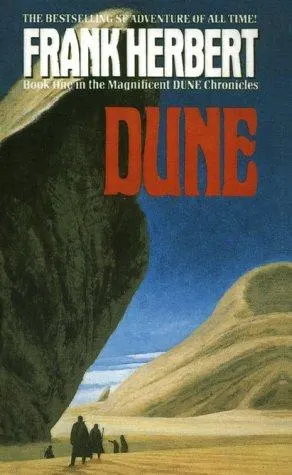
Books like Dune
Dune’s masterstroke is making every glass of water, marriage proposal, and whispered prophecy part of the same apparatus of power.
If you liked Dune, you’ll love these
Not lookalikes — kindred books. Each one shares something essential with Dune, and we tell you exactly what.
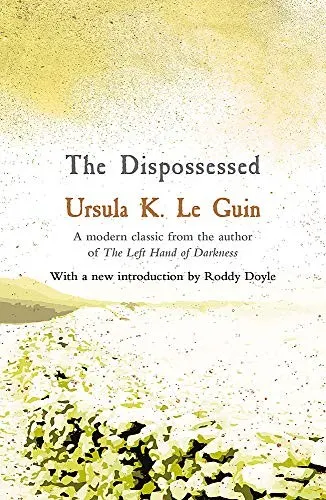
Le Guin shares Herbert’s fascination with societies built by material limits. Physicist Shevek moves between an austere anarchist moon and its wealthy capitalist neighbor, and neither world is reduced to a slogan: customs, architecture, sex, work, and language all reveal the pressures beneath its ideals.
Winner of both the Hugo and Nebula awards, The Dispossessed offers the intellectual exhilaration of Dune without imitating its pageantry. It makes political theory intimate, showing how institutions colonize the imagination—and how difficult genuine freedom is to think.
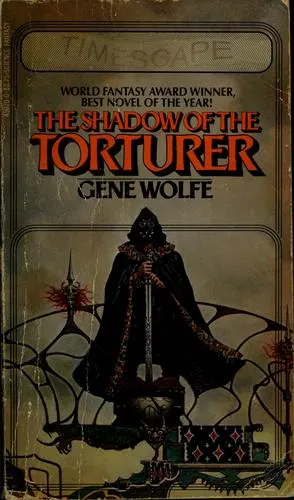
If you loved learning Arrakis by interpreting fragments—rituals, epigraphs, loaded conversations—Wolfe offers an even more demanding pleasure. Severian, an apprentice in an ancient guild, narrates his exile through a far-future world whose true nature is never conveniently explained. Every archaic word and apparent digression may be evidence.
This opening volume of The Book of the New Sun belongs to one of speculative fiction’s most revered works, famous for changing shape on rereading. Its concerns with memory, religion, cruelty, and manufactured saviors make it a profound companion to Dune. Missing it means missing perhaps science fiction’s richest invitation to read like a conspirator.
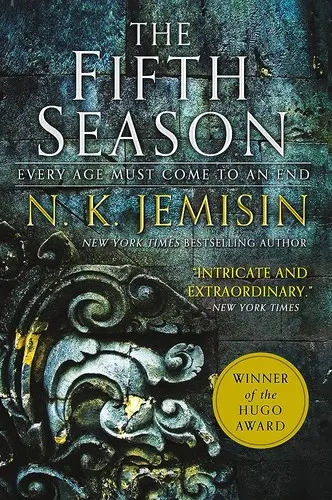
Jemisin understands, as Herbert did, that environment is not scenery: it determines hierarchy, education, prejudice, technology, and the imaginable future. Her continent is repeatedly broken by seismic catastrophe, while people able to control geological forces are both indispensable and brutally constrained.
The novel’s unusual structure is not decoration; it makes the reader experience a fractured world from within. Urgent, furious, and emotionally immediate, The Fifth Season began the only trilogy whose every volume won the Hugo Award for Best Novel. Read it for world-building with tectonic force—and for the moment its seemingly separate pressures lock together.