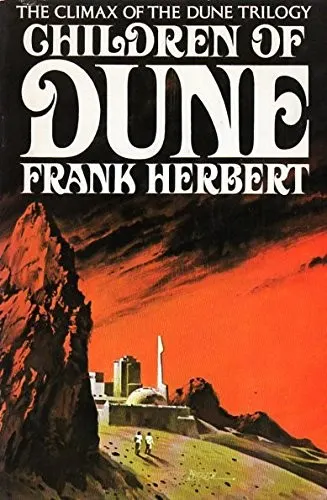
Books like Children of Dune
After its collision of inherited memory, dynastic strategy, ecological destiny, and children forced to outthink the adults governing them, the appetite is for science fiction in which consciousness itself becomes a battlefield.
If you liked Children of Dune, you’ll love these
Not lookalikes — kindred books. Each one shares something essential with Children of Dune, and we tell you exactly what.
No novel more incisively develops the question lurking inside Leto and Ghanima: if a child inherits another person’s memories, expectations, and political purpose, where does inheritance end and selfhood begin? On Cyteen, the death of a scientist-stateswoman prompts an audacious attempt to recreate her—not simply through cloning, but by reproducing the psychological pressures that formed her.
Cherryh makes education, affection, trauma, and dependency into instruments of statecraft. Conversations carry the danger of coups; childhood relationships may be experiments conducted by unseen adults. Yet the characters never feel like pieces in an intellectual puzzle: their need to determine which desires are truly theirs gives this vast novel its emotional force. A Hugo winner and one of Cherryh’s defining achievements, Cyteen offers the same intoxicating fusion of family drama, political chess, and philosophical unease as Children of Dune—then examines the making of a ruler with even more clinical intensity.
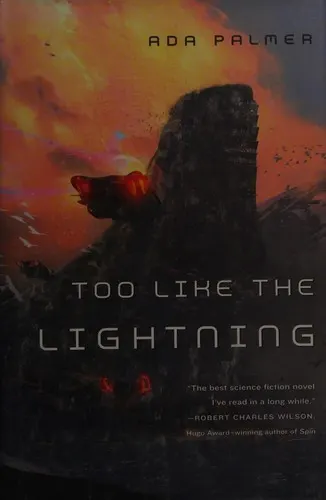
For the baroque plotting and argumentative energy of Children of Dune, begin Palmer’s Terra Ignota sequence. Its twenty-fifth century has replaced nations with voluntary global societies, each founded on a different conception of the good life. Mycroft Canner, an infamous convict serving society, narrates in the manner of an eighteenth-century philosopher—and immediately warns us that neither his loyalties nor his account can be taken at face value.
The pleasure lies in watching an apparently stable civilization reveal its hidden dependencies: private faith beneath public secularism, personal allegiance beneath rational institutions, and family structures stranger and more politically consequential than any constitution. Palmer treats theology, gender, law, and historical inevitability not as decoration but as live explosives. This Hugo-finalist novel demands attention, rewards rereading, and inspires unusual devotion because few modern series attempt anything so intellectually extravagant.
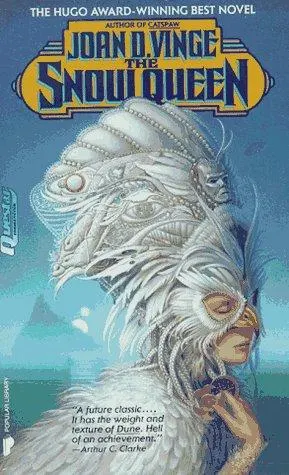
Vinge’s Hugo-winning novel shares Herbert’s gift for making ecology, economics, mythology, and political power feel like parts of one living mechanism. On the planet Tiamat, a long astronomical cycle divides society between Summer and Winter rule. As access to the wider interstellar civilization is about to close, the reigning Snow Queen sets a plan in motion to extend her influence beyond its natural limit.
What begins with the grandeur of legend gradually exposes the material machinery beneath legend: scarce resources, controlled knowledge, offworld exploitation, and rulers who understand that managing a people’s story can be more effective than commanding its armies. Vinge balances this systemic vision with the intimate pull between two young people whose futures are caught inside the cycle. The Snow Queen is sweeping without becoming impersonal, romantic without surrendering political intelligence—a major work about whether anyone can escape a destiny designed by both nature and power.