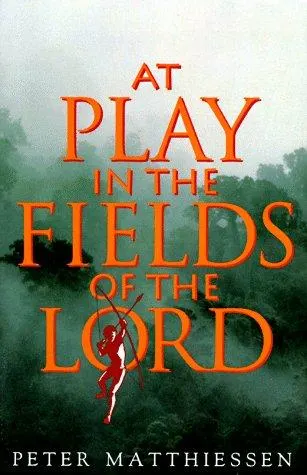
Books like At Play in the Fields of the Lord
A small plane drops into a raw Amazon outpost nearly out of fuel, and its stranded men immediately begin calculating what the wilderness—and its people—might be worth to them. These novels share Matthiessen’s fascination with spiritual hunger, cultural trespass, and landscapes that expose human delusion.
If you liked At Play in the Fields of the Lord, you’ll love these
Not lookalikes — kindred books. Each one shares something essential with At Play in the Fields of the Lord, and we tell you exactly what.
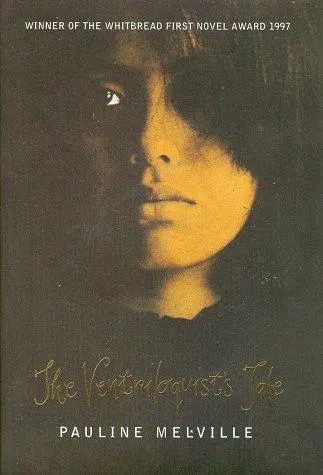
Melville gives the Indigenous world the authority and imaginative freedom that outsiders in Matthiessen’s novel cannot comprehend. Following a Wapisiana family in Guyana, she sets missionaries, anthropologists, inherited myths, and unruly desire against one another—then lets a trickster narrator mock every claim to objective truth.
Winner of the Whitbread First Novel Award, this is a dazzlingly assured book: comic, sensual, intellectually mischievous, and alive to the violence hidden inside benevolent curiosity. If At Play in the Fields of the Lord made you feel that conversion and study can be subtler forms of conquest, Melville carries that insight further—and makes the threatened culture speak back.
The jungle becomes the Australian interior, but the deeper terrain is unmistakably related: a charismatic European enters a vast country convinced that extremity will reveal his greatness. White turns the expedition into a ferocious examination of pride, mysticism, erotic longing, and the fantasy that land exists to furnish outsiders with revelation.
Voss won the inaugural Miles Franklin Award and became one of the defining Australian novels of the twentieth century. Its landscape is not scenery but a force that strips language, rank, and self-mythology from everyone who confronts it. Readers drawn to Matthiessen’s visionary intensity—and his distrust of men who mistake obsession for transcendence—should not miss it.
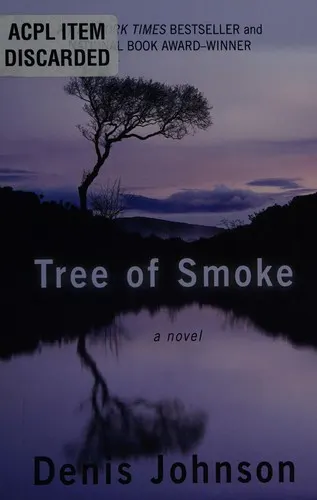
Johnson’s National Book Award winner relocates Matthiessen’s moral fever to the American war in Vietnam. Intelligence operatives, soldiers, missionaries, and Vietnamese civilians move through a world where idealism, cruelty, bureaucracy, and mystical yearning have become impossible to separate.
What links the novels is less war or jungle than their scale of vision: both show intervention as a spiritual pathology, populated by people who cannot tell whether they are saving others, remaking themselves, or simply destroying what they cannot understand. Johnson’s prose can be hallucinatory, brutally funny, and suddenly tender. Tree of Smoke offers the same unnerving sense that history is being driven by private delusions—and that no one escapes uncontaminated.