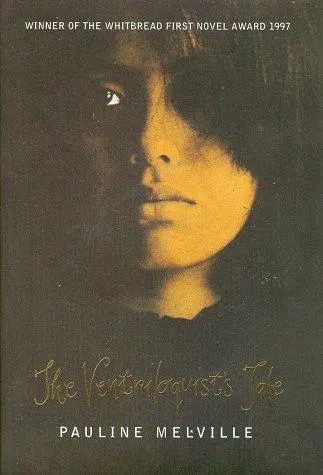
Books like The Ventriloquist's Tale
Its sly, many-mouthed storytelling keeps changing shape: on each return, another joke reveals a wound, another myth overturns an official truth, and the supposed teller proves to be someone else’s puppet.
If you liked The Ventriloquist's Tale, you’ll love these
Not lookalikes — kindred books. Each one shares something essential with The Ventriloquist's Tale, and we tell you exactly what.
Adamine Bustamante, a Jamaican woman who receives prophetic “warnings,” tells her life while a self-styled Mr Writer repeatedly interrupts to correct her. Their struggle over the narrative becomes wonderfully comic and increasingly unsettling: who owns a life once it has been written down, and whose version will readers call sane?
Like Melville, Miller makes storytelling itself the contested territory. Caribbean speech, spiritual knowledge and institutional authority collide without being reduced to a simple opposition between superstition and reason. Adamine’s indomitable voice makes this one of those rare novels whose narrator seems to keep arguing with you after the book is closed.
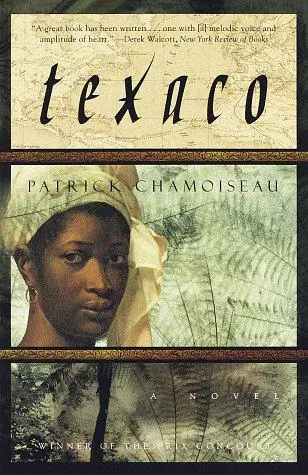
At the edge of modern Fort-de-France, an elderly woman named Marie-Sophie Laborieux begins telling an urban planner how her community came to exist. What follows is an exuberant counter-history of Martinique, assembled from testimony, notebooks, folklore, Creole rhythms and voices that refuse bureaucratic tidiness.
Winner of the Prix Goncourt, Texaco is kin to The Ventriloquist’s Tale in its conviction that colonial history cannot be truthfully narrated in the colonizer’s orderly forms. Chamoiseau’s language is sensuous, bawdy and inventive; his storyteller simultaneously preserves the past and cheerfully remakes it. To miss Texaco is to miss one of the great demonstrations of oral memory turning itself into a novel.
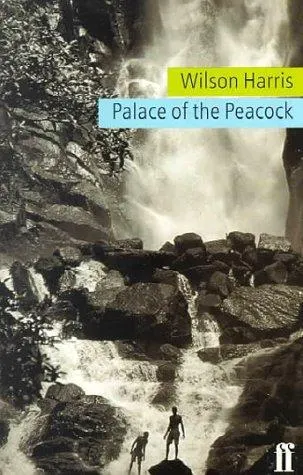
A crew travels into Guyana’s interior under the brutal Donne, but almost immediately the expedition slips free of ordinary realism. Landscape becomes memory, identities blur, and the vocabulary of conquest is invaded by dream and Indigenous presence.
This cornerstone of Caribbean modernism is stranger and more concentrated than Melville’s novel, yet it works on the same deepest nerve: the inadequacy of European ways of seeing the Guianas. Harris does not merely insert myth into history; he makes myth alter the reader’s sense of time, self and reality. Its demanding, luminous prose rewards surrender rather than decoding—and reveals an imaginative tradition without which Melville’s audacity is harder to see in full.