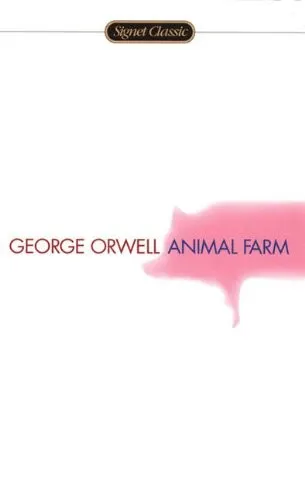
Books like Animal Farm
How does a promise of equality harden into a system in which domination seems natural—and even the victims repeat its slogans? These three novels pursue that unease with Orwell’s moral clarity, compression, and distrust of political language.
If you liked Animal Farm, you’ll love these
Not lookalikes — kindred books. Each one shares something essential with Animal Farm, and we tell you exactly what.
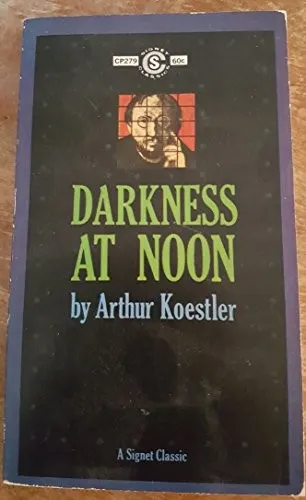
If Animal Farm shows a revolution betraying itself from the outside, Darkness at Noon enters the mind of one of its betrayed architects. Rubashov, an old revolutionary, is imprisoned by the regime he helped create and forced to confront the reasoning by which every cruelty became politically “necessary.”
Koestler’s enduring classic makes ideology feel like a locked room: each argument is lucid, logical, and horrifying. Readers drawn to Orwell’s transformation of commandments into propaganda will recognize the same terror here—the moment language stops describing truth and begins manufacturing guilt.
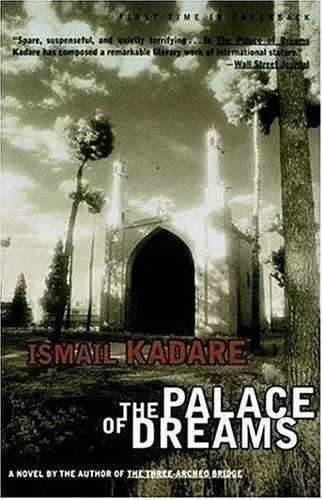
Kadare builds his nightmare around a wonderfully simple invention: an imperial ministry collects citizens’ dreams, searching them for omens of sedition. A young man joins its bureaucracy and discovers an institution at once absurd, mundane, and almost impossible to resist.
The kinship with Animal Farm lies in the deadpan precision with which an irrational system acquires rules, offices, and obedient servants. Published under Albania’s dictatorship and swiftly condemned there, the novel turns bureaucracy into myth without losing its political bite. Kadare, later the inaugural International Booker Prize winner, makes every corridor in the Palace feel like part of an empire’s mind.
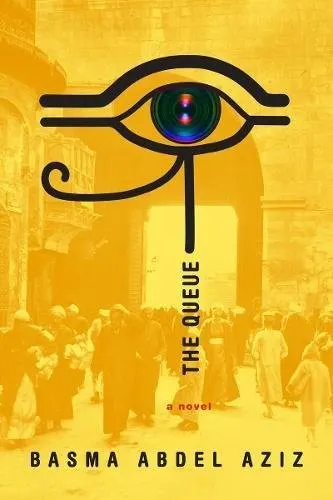
After a failed uprising, citizens must obtain permission from the Gate—an authority that never opens yet steadily expands its control. A wounded man joins the queue outside, where paperwork, rumor, official denials, and ordinary human needs accumulate.
Abdel Aziz’s satire has Orwell’s gift for making tyranny both ridiculous and lethal. Its sharpest insight is that power need not persuade people of one grand lie; it can exhaust them with forms, delays, contradictory instructions, and the demand that they deny what they have seen. The Queue is a lean, unnervingly contemporary fable, and its impossible bureaucracy will remain recognizable long after the final page.