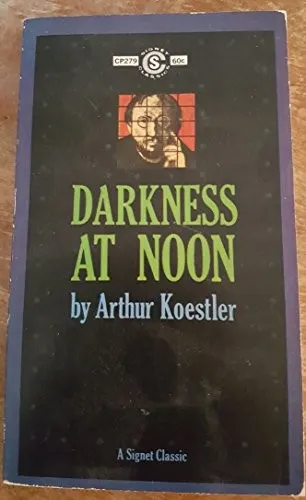
Books like Darkness at Noon
Darkness at Noon finds its great companion in Victor Serge’s The Case of Comrade Tulayev, which turns the same revolutionary nightmare into a panoramic human tragedy.
If you liked Darkness at Noon, you’ll love these
Not lookalikes — kindred books. Each one shares something essential with Darkness at Noon, and we tell you exactly what.
A chance assassination sends suspicion rippling through the Soviet apparatus, drawing officials, dissidents, diplomats, and aging revolutionaries into an investigation whose political usefulness matters more than truth. Where Koestler traps us inside Rubashov’s cell and reasoning, Serge opens the doors onto an entire society compelled to participate in its own falsification.
Serge had himself been a revolutionary and a prisoner under Stalin, and his authority is inseparable from his compassion: even compromised figures remain vividly human. Widely regarded as his masterpiece, the novel is intellectually bracing, darkly comic, and unexpectedly tender. Anyone haunted by Rubashov’s effort to reconcile conscience with historical necessity should not miss Serge’s larger, sadder reckoning with the same betrayal.
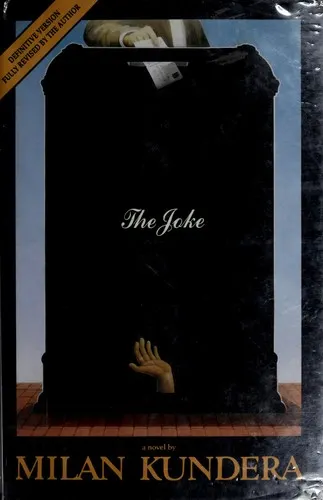
Ludvík sends a flippant postcard to a young woman; the Party reads it as ideological evidence, and his life is abruptly redirected. Kundera understands, as Koestler does, that totalitarian power works through interpretation: irony becomes guilt, private resentment acquires official vocabulary, and a person’s character is replaced by a politically convenient narrative.
But The Joke is no imitation of Koestler’s severity. It is polyphonic, erotic, mordantly funny, and fascinated by the damage that persists after the tribunal has finished. Kundera’s celebrated first novel shows ideology poisoning memory, love, and revenge—not through abstract argument alone, but through voices that continually expose one another’s self-deceptions. It is essential reading for anyone who wants to see the moral machinery of Darkness at Noon escape the prison and enter ordinary life.
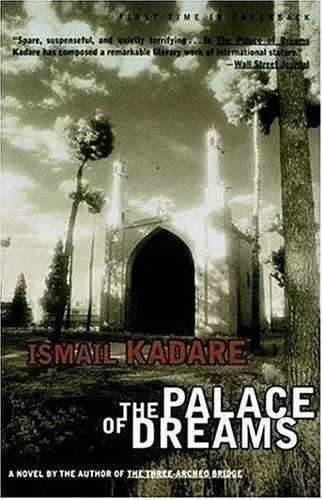
In Kadare’s uncanny novel, Mark-Alem enters a vast imperial institution that collects, sorts, and interprets the dreams of the population. Its bureaucrats claim to be discovering dangerous meanings; in practice, interpretation itself becomes an instrument of rule. The kinship with Koestler lies in that chilling transformation of logic into coercion: once authority controls what symbols mean, innocence offers no protection.
Kadare gives the nightmare the lucidity of myth. Corridors, files, classifications, and whispered family histories accumulate into an atmosphere at once absurd and suffocating. The book was attacked by Albania’s communist authorities, and it has become one of the defining works of a writer later awarded the inaugural Man Booker International Prize. Few novels capture so elegantly the terror of being judged not merely for one’s actions or words, but for meanings the state can manufacture at will.