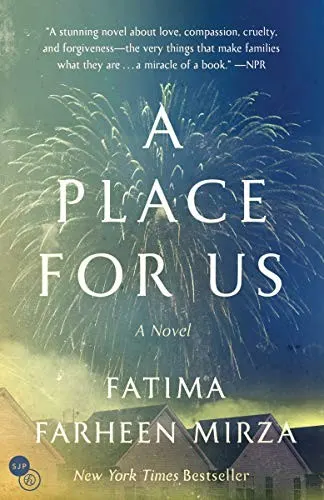
Books like A Place for Us
Reading A Place for Us feels like being admitted into a family’s most private rooms, where devotion and disappointment have become nearly indistinguishable and every remembered kindness carries the ache of what went unsaid.
If you liked A Place for Us, you’ll love these
Not lookalikes — kindred books. Each one shares something essential with A Place for Us, and we tell you exactly what.

Ng’s celebrated debut begins with a family confronting the death of its favored daughter, then moves among parents and children to reveal how love can harden into expectation. Like Mirza, Ng refuses easy villains: parental ambitions arise from old humiliations, while secrecy becomes both protection and betrayal.
Its great power lies in dramatic irony—you understand what each family member cannot say to the others. Compact, precise, and quietly devastating, it offers the same painful recognition that a household may be full of love and still fail to make its children feel known.
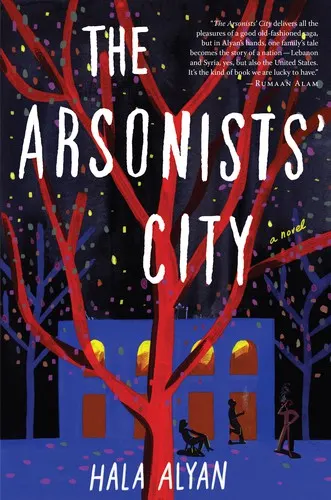
When the Nasr family gathers in Beirut after their father decides to sell the family home, old loyalties and concealed histories begin pressing against the present. Alyan, also an accomplished poet, gives every member of this Lebanese-Syrian-American family a distinct emotional weather: resentment, longing, rivalry, guilt.
Where A Place for Us traces the price of belonging, this novel asks who gets to define home—and whether adulthood ever frees us from our assigned role in a family. It is more volatile and sensuous than Mirza’s novel, but equally alert to the tenderness hiding inside anger. The Nasrs soon feel less like characters than people whose arguments you have overheard through a wall.
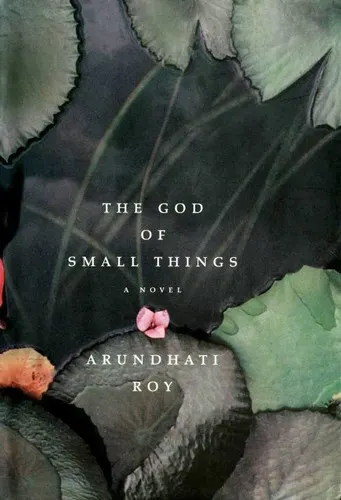
Roy’s Booker Prize-winning novel shares Mirza’s understanding that families are governed by invisible rules: whom one may love, what must be forgiven, and which wounds are never to be named. Its chronology folds and circles, allowing small childhood moments to acquire terrible significance as the larger family history comes into view.
The prose is more exuberant and linguistically daring than A Place for Us, yet the emotional effect is closely related: blame dissolves as perspective deepens, and intimate betrayals become inseparable from social and familial pressure. Few novels show so brilliantly how children absorb adult grief—or how a single family can remain haunted by its own forms of love.