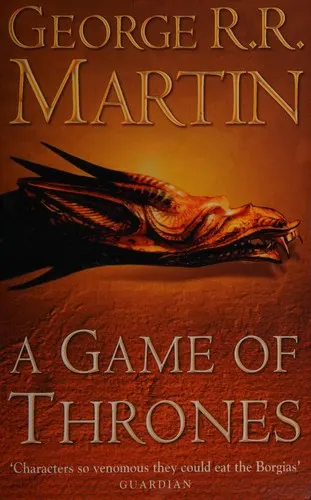
Books like A Game of Thrones
Power gathers in torchlit rooms, old grudges outlive their makers, and every victory leaves blood on someone’s hands. These novels preserve that intoxicating mixture of human frailty, political calculation, and history moving beneath the characters’ feet.
If you liked A Game of Thrones, you’ll love these
Not lookalikes — kindred books. Each one shares something essential with A Game of Thrones, and we tell you exactly what.
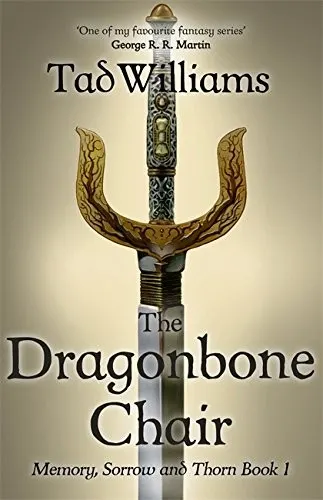
This is one of the clearest ancestors of Martin’s epic: Williams helped prove that modern fantasy could question inherited legends rather than simply reenact them. His world feels ancient because its peoples remember the past differently, and those conflicting memories matter politically.
The novel begins patiently, following an insignificant castle servant whose limited understanding makes the gathering crisis feel enormous and obscure. As in A Game of Thrones, apparent archetypes acquire inconvenient motives, authority conceals weakness, and historical truth proves more dangerous than folklore. Its celebrated Memory, Sorrow, and Thorn trilogy influenced a generation of epic fantasy—including Martin—and readers still revere its slow accumulation of dread and wonder. Anyone fascinated by what Martin did to the traditional quest narrative should read one of the books that showed him how much further fantasy could go.
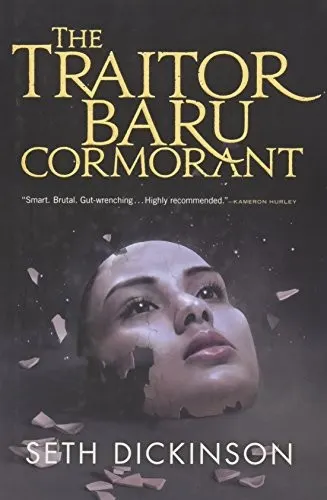
Read this for the ruthless pleasure of watching intelligence become both a weapon and a trap. When an expansionist empire absorbs Baru’s homeland, she resolves to master its institutions from within. Her battlefield is taxation, trade, patronage, and divided allegiance—but Dickinson makes a ledger entry feel as consequential as a drawn sword.
What it shares with Martin is not merely intrigue but an unsentimental understanding that power changes the people who pursue it. Baru is brilliant, wounded, ambitious, and capable of choices that invite argument long after the book closes. The novel has earned a fiercely devoted readership because it treats political strategy as inseparable from identity and emotional cost. If Tyrion’s maneuvering, Littlefinger’s systems-thinking, and the series’ refusal to protect admirable characters were central to your love of A Game of Thrones, Baru is indispensable.

Mantel’s Booker Prize winner offers no dragons, yet it captures the most compelling thing about King’s Landing: the sensation of standing beside a formidable mind while a court rearranges itself around him. Thomas Cromwell rises through Tudor England by noticing what others overlook—debts, appetites, insults, useful silences—and Mantel’s close, fluid prose makes his calculations feel immediate.
Unlike flatter tales of scheming courtiers, Wolf Hall understands that political skill can coexist with loyalty, tenderness, resentment, and self-deception. Its nobles are not chess pieces; each carries a private history that limits what can be demanded or forgiven. Mantel transformed a notorious historical figure into one of contemporary fiction’s great protagonists, and the result has the density of an epic with the intimacy of whispered counsel. For readers who wished Martin would linger even longer over negotiation, faction, and the peril of speaking honestly to a ruler, this is the masterpiece waiting beyond the fantasy shelf.