Author
Books like Walter M. Miller
3 books we recommend to Walter M. Miller readers, drawn from A Canticle for Leibowitz — each with the reason why.
If you loved A Canticle for Leibowitz
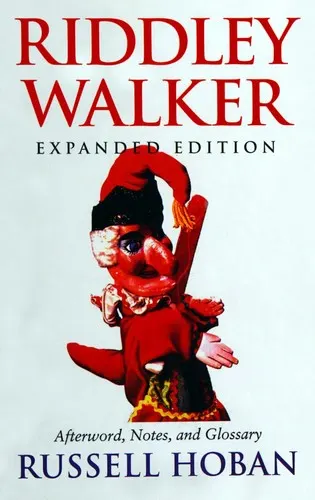
No novel comes closer to Miller’s vision of knowledge surviving as broken ritual. Long after catastrophe, young Riddley inhabits a culture assembled from garbled history, puppet shows, taboo and fragments of technological memory. Hoban’s invented English initially feels forbidding; soon it becomes the book’s great pleasure, forcing you to reconstruct the past exactly as its characters do.
Like Canticle, this cult classic is mordantly alert to the possibility that humanity will rediscover power before wisdom. Yet its ruined world feels astonishingly alive rather than merely bleak. Once your ear adjusts to Riddley’s voice, the novel becomes hypnotic—and its final implications linger like a half-deciphered scripture.
Stephenson imagines scholars living behind ancient walls, preserving mathematics and philosophy while the outside world repeatedly changes its regimes, fashions and official truths. Through the young Fraa Erasmas, ritual observance and abstract argument become forms of adventure; discussions of geometry, consciousness and cosmology carry genuine dramatic pressure.
What connects this Locus Award winner to Canticle is not simply its monastic architecture, but its fascination with institutions built to think beyond a single lifetime. It asks whether intellectual seclusion protects civilization or abandons it—and what scholars owe the world when danger arrives at the gate. Vast, demanding and exhilarating, it offers the rare pleasure of watching ideas become heroic without making thinkers infallible.
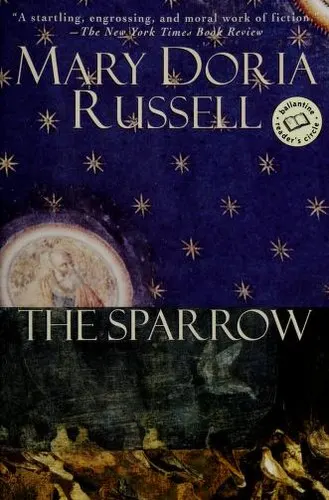
When radio astronomers detect music from another world, the Society of Jesus organizes a mission. The opening has already shown that only the Jesuit linguist Emilio Sandoz returns, physically and spiritually devastated; the suspense lies in discovering how an expedition founded on friendship, scholarship and faith became incomprehensible tragedy.
Miller’s theological seriousness finds its most piercing modern counterpart here. Russell treats belief neither as foolish superstition nor as an easy answer: faith can inspire courage, misread coincidence as providence and survive in forms almost indistinguishable from accusation. Winner of the Arthur C. Clarke Award, The Sparrow has earned lasting devotion because its first-contact story becomes an intimate trial of God, language and human certainty. Its questions do not end when the narrative does.