Author
Books like Tom McCarthy
5 books we recommend to Tom McCarthy readers, drawn from Remainder and Satin Island — each with the reason why.
If you loved Remainder
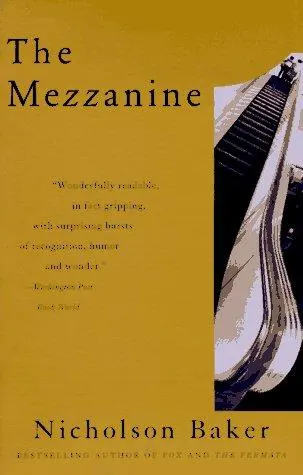
Baker’s cult classic follows a man riding an escalator back to work after lunch while his mind examines shoelaces, drinking straws, paper towels, and the choreography of mundane movement. That microscopic attention is precisely the point: like Remainder, it treats the apparently trivial as a system whose hidden rules can be uncovered through sufficient scrutiny.
The mood is warmer and more comic than McCarthy’s, but the narrators share a compulsive need to isolate gestures and replay them mentally until they disclose something uncanny. Baker’s famous footnotes keep opening trapdoors beneath the narrative, proving that consciousness can make even a milk carton feel bottomless. It is one of the great novels of obsessive noticing—and after reading it, everyday life never quite regains its innocence.
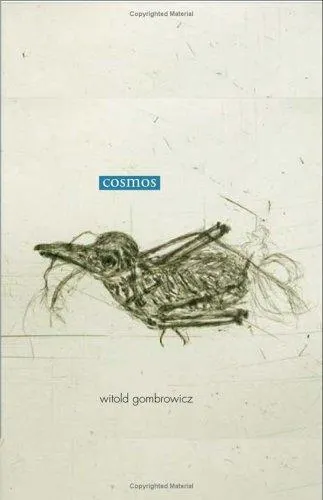
Two young men arrive at a country house and begin noticing possible connections among stray objects: a hanging sparrow, marks on a ceiling, the shape of a mouth. Soon the narrator cannot tell whether he is discovering a pattern or manufacturing one.
That tension will feel electrifyingly familiar to a reader of Remainder. Gombrowicz shows consciousness imposing form on resistant matter, then becoming trapped inside the form it has made. Yet Cosmos is not an abstract exercise: it is funny, feverish, sexually charged, and increasingly claustrophobic. Awarded the Prix International in 1967, it remains one of the most unnerving novels ever written about the appetite for significance. McCarthy’s staged reconstructions look different once you have entered Gombrowicz’s universe, where arranging reality may be indistinguishable from losing your mind.
A fugitive hiding on a deserted island discovers that elegant visitors have appeared there, behaving as if he did not exist. Their gestures and conversations recur with peculiar exactness, and his attempt to understand them becomes an inquiry into repetition, presence, and the possibility of preserving experience perfectly.
Bioy Casares shares McCarthy’s cool precision and his suspicion that copies may possess a disturbing advantage over originals. The novel turns metaphysical questions into concrete machinery: bodies occupy space, scenes recur, and desire attaches itself to an engineered reality. Borges famously called it a perfect novel, and its influence runs through later fiction and film—but its enduring force comes from how cleanly its cerebral conceit becomes an emotional trap. It is brief, elegant, and unforgettable: a foundational work for anyone captivated by Remainder’s dream of making an event happen again, exactly right.
If you loved Satin Island

Speedboat is what information overload felt like before the internet made it everyone’s permanent condition. Its narrator, a journalist, moves through parties, classrooms, relationships, news reports, overheard remarks, and sudden alarms; the novel arrives in brilliant shards rather than a reassuring sequence.
A reader who loved Satin Island’s accumulation of anecdotes, theories, and signals will recognize Adler’s deeper method: juxtaposition generates meanings that explanation would flatten. The prose is dry, exact, funny, and continually destabilizing—each paragraph seems to have survived because it contains an electrical charge. Winner of the Hemingway Foundation/PEN Award and cherished by generations of writers, Speedboat is one of the indispensable fragmentary novels: brief enough to devour, dense enough to alter how you read the noise of daily life.
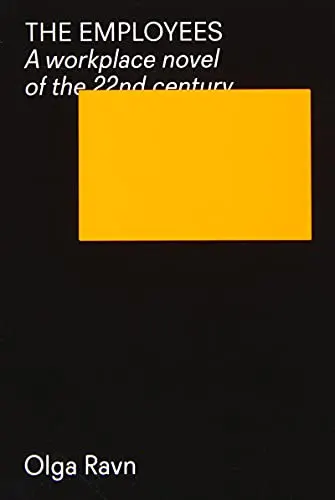
Presented as a sequence of statements gathered from workers aboard a spacecraft, The Employees turns an institutional survey into eerie, compressed literature. Human and humanoid employees testify about their duties, their bodies, their colleagues, and a collection of baffling objects; managerial language gradually reveals desires and terrors it cannot contain.
This is the closest match for the peculiar thrill of Satin Island’s Great Report: the fantasy that an organization can collect reality, classify it, and make it legible. Ravn makes forms, interviews, and bureaucratic euphemisms carry genuine lyric intensity, while leaving crucial connections for the reader to infer. Shortlisted for the International Booker Prize, this slim Danish novel has earned devoted readers because it feels at once cerebral and wounded. It can be read in an evening, but its voices linger like testimony from the future of work.