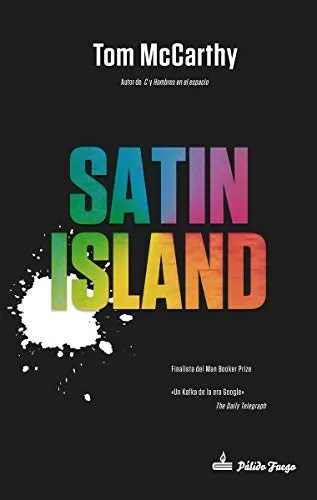
Books like Satin Island
Start with a novel about a man buying shoelaces during his lunch break. Nicholson Baker turns that microscopic errand into an exhilarating investigation of objects, habits, memory, and corporate life—the same unlikely transformation that makes Satin Island’s riffs feel more urgent than conventional plot.
If you liked Satin Island, you’ll love these
Not lookalikes — kindred books. Each one shares something essential with Satin Island, and we tell you exactly what.
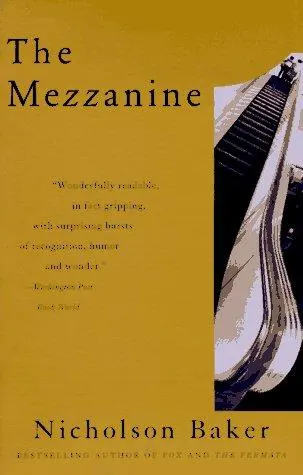
Baker’s audacious debut takes place largely during one escalator ride, yet it contains a whole anthropology of late-capitalist existence: staplers, straws, office bathrooms, packaging, and the private histories embedded in mundane technologies. Its famous footnotes keep branching away from the ostensible story until digression becomes the real action.
Like U., Baker’s narrator cannot encounter an ordinary object without discovering a system behind it. But where Satin Island is cool, ominous, and theoretically charged, The Mezzanine is comic, sensuous, and oddly tender. It became a cult touchstone because it proved that sustained attention could make the disposable world strange. Read it and every unnoticed design decision around you will begin demanding interpretation.
Speedboat is what information overload felt like before the internet made it everyone’s permanent condition. Its narrator, a journalist, moves through parties, classrooms, relationships, news reports, overheard remarks, and sudden alarms; the novel arrives in brilliant shards rather than a reassuring sequence.
A reader who loved Satin Island’s accumulation of anecdotes, theories, and signals will recognize Adler’s deeper method: juxtaposition generates meanings that explanation would flatten. The prose is dry, exact, funny, and continually destabilizing—each paragraph seems to have survived because it contains an electrical charge. Winner of the Hemingway Foundation/PEN Award and cherished by generations of writers, Speedboat is one of the indispensable fragmentary novels: brief enough to devour, dense enough to alter how you read the noise of daily life.
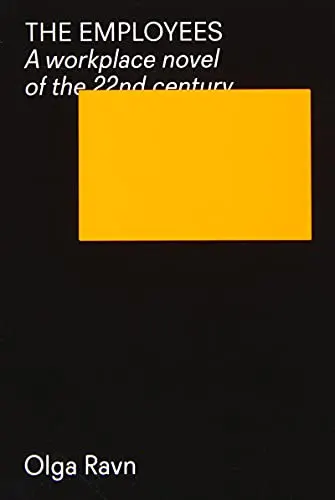
Presented as a sequence of statements gathered from workers aboard a spacecraft, The Employees turns an institutional survey into eerie, compressed literature. Human and humanoid employees testify about their duties, their bodies, their colleagues, and a collection of baffling objects; managerial language gradually reveals desires and terrors it cannot contain.
This is the closest match for the peculiar thrill of Satin Island’s Great Report: the fantasy that an organization can collect reality, classify it, and make it legible. Ravn makes forms, interviews, and bureaucratic euphemisms carry genuine lyric intensity, while leaving crucial connections for the reader to infer. Shortlisted for the International Booker Prize, this slim Danish novel has earned devoted readers because it feels at once cerebral and wounded. It can be read in an evening, but its voices linger like testimony from the future of work.