Author
Books like Robert Musil
3 books we recommend to Robert Musil readers, drawn from The Man Without Qualities — each with the reason why.
If you loved The Man Without Qualities
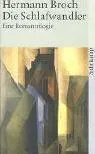
Broch shares Musil’s great subject: what happens when inherited values still govern people’s gestures but no longer command their belief. Across three linked sections, his characters inhabit increasingly unstable moral worlds, each mistaking habit, ambition, or fanaticism for solid ground.
Its daring lies in its changing form. Social realism gives way to fractured narrative, poetry, and the extraordinary essay-sequence “Disintegration of Values.” Like Musil, Broch refuses to separate storytelling from diagnosis; the novel thinks because thought is part of the historical crisis it depicts. Written by Musil’s Viennese contemporary and now recognized as a landmark of European modernism, The Sleepwalkers is the indispensable companion work—not an imitation, but another immense attempt to discover what a novel can know.
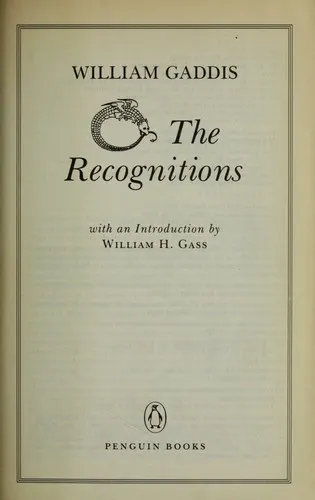
If Musil’s merciless intelligence and panoramic comedy were the chief pleasures, read Gaddis. The Recognitions plunges into a world of painters, critics, clergy, patrons, and partygoers where nearly everyone speaks brilliantly and listens badly. Its governing question is authenticity: whether a true work, conviction, or self can survive in a culture that recognizes only signatures, prices, and reputations.
Gaddis makes the reader perform the work of recognition. Dialogue often arrives without labels; motifs recur before their meaning becomes clear; jokes ricochet across hundreds of pages. The reward is a rare sensation of accumulated design, as if the surrounding chatter had secretly been composing a vast fugue. Dismissed by many reviewers on publication, it became one of the great recovered reputations in postwar American fiction and a touchstone for later maximalists. Missing it means missing one of the few novels audacious enough to answer Musil’s scale of intelligence with its own.
Nádas offers a more bodily, intimate route to Musilian depth. His long, exquisitely controlled sentences follow consciousness as it turns sensation into interpretation: a glance, a room, or the pressure of another person’s presence becomes an inquiry into desire, shame, memory, and power. Politics is never merely background; it enters the nerves and teaches the body what it may admit.
The novel’s interwoven voices and periods gradually unsettle the authority of memory itself. Where Musil tests ideas by placing them in ironic suspension, Nádas tests identity by showing how thoroughly it is composed by other people and by history. Susan Sontag famously called A Book of Memories “the greatest novel written in our time,” praise whose extravagance begins to seem reasonable once its architecture emerges. It is one of the major achievements of late twentieth-century European fiction, and readers who crave novels with the density and amplitude of lived thought should not leave it unread.