Books like A Book of Memories
In A Book of Memories, recollection is never a stable record: desire revises it, the body contradicts it, and private consciousness becomes inseparable from the pressures of history.
If you liked A Book of Memories, you’ll love these
Not lookalikes — kindred books. Each one shares something essential with A Book of Memories, and we tell you exactly what.
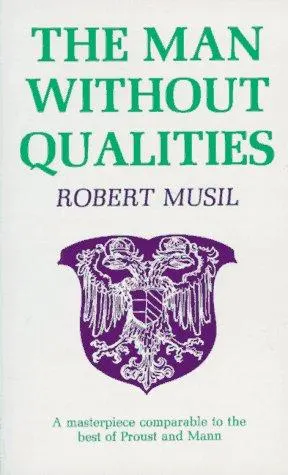
Musil offers the same rare fusion of microscopic self-scrutiny and panoramic social intelligence. Ideas are not decorative interruptions but lived forces: they alter flirtations, friendships, ambitions, and the way characters inhabit their bodies. Like Nádas, Musil can move from an almost clinical observation of a gesture to a devastating account of an entire culture’s bad faith.
This unfinished modernist monument is also far funnier than its reputation suggests. Its irony keeps intellectual seriousness from hardening into solemnity, while its fascination with erotic possibility gives its abstractions heat. Readers who loved Nádas’s patient exposure of the lies beneath identity will find Musil inexhaustible—the kind of book whose incompletion feels less like a defect than proof that its inquiry could never honestly end.
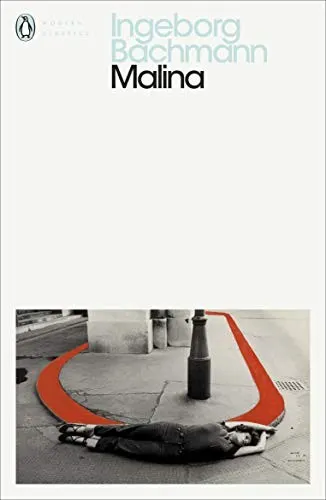
Malina compresses into a short, volatile novel what Nádas unfolds across hundreds of pages: a self divided by love, language, memory, and historical violence. Its unnamed narrator lives between an overpowering affair with Ivan and the cool, enigmatic presence of Malina; from that arrangement Bachmann builds a terrifying study of how intimacy can erase the person who experiences it.
The prose shifts from lucid observation to fairy tale, dialogue, nightmare, and fracture, making psychic disintegration formally palpable. Bachmann’s only completed novel, long a touchstone of German-language feminist modernism, has the intensity of a private confession and the authority of a historical indictment. If Nádas convinced you that the catastrophes of Europe persist inside bedrooms and sentences, Malina is indispensable.
Proust is the essential destination for anyone captivated by Nádas’s conviction that memory is creative, bodily, and morally unreliable. The famous involuntary recollections are only one part of the achievement. More crucial is Proust’s ability to follow jealousy, vanity, erotic fixation, and social embarrassment through every turn of consciousness, until a passing sensation reveals the architecture of a life.
His long sentences do not merely describe thought; they reproduce its delays, evasions, revisions, and sudden recognitions. And although the novel is one of modernism’s acknowledged summits, it remains seductively alive: comic, cruel, sensuous, and crowded with readers’ lifelong favorite characters. Nádas shows what memory conceals within the self; Proust shows how an entire world can be recovered from those concealments. To miss it is to miss one of the great sources of the novelistic freedom Nádas uses so magnificently.