Author
Books like Richard Flanagan
3 books we recommend to Richard Flanagan readers, drawn from Gould's Book of Fish — each with the reason why.
If you loved Gould's Book of Fish

Barth’s great mock-historical picaresque follows Ebenezer Cooke, an extravagantly innocent poet dispatched to colonial Maryland, where every supposed fact soon becomes entangled in fraud, appetite and competing testimony.
Like Flanagan, Barth uses excess as an instrument of skepticism. The archaic language is uproariously elaborate, the adventures grow grotesque, and documents meant to certify history only make it less trustworthy. Yet this hugely influential landmark of American postmodern fiction is not a bloodless literary game: beneath its farce lies a savage account of how colonies manufacture heroic legends from exploitation. If Gould’s unreliable eloquence delighted you, Cooke’s collision with a world far dirtier than his poetry is irresistible.
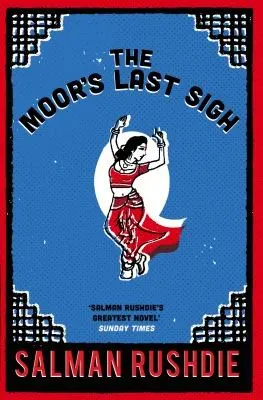
Moraes Zogoiby narrates his family history at fever pitch, crowding the page with painters, merchants, political fanatics, intimate betrayals and jokes that mutate into curses. His mother’s paintings continually rework private life and public history, much as Gould’s fish turn art into testimony, concealment and revolt.
Rushdie’s sentences have the same dangerous abundance Flanagan’s do: puns proliferate, bodies become grotesque emblems, and storytelling feels capable of holding an entire compromised country—until reality tears through it. Shortlisted for the Booker Prize and winner of the Whitbread Novel Award, it is one of Rushdie’s richest novels, both dazzlingly performative and unexpectedly mournful. To miss it would be to miss one of the rare historical novels whose verbal splendor intensifies, rather than prettifies, its grief.
Ninety-two-year-old Marian Leatherby receives a hearing trumpet and discovers that her family intends to confine her in an institution. From that bluntly cruel premise, Carrington builds a deadpan rebellion against every authority that claims to define sanity, age, femininity or reality.
The kinship with Flanagan lies in its anarchic moral imagination. Institutional brutality is answered not with solemn realism but with drawings, occult puzzles, peculiar food, impossible architecture and transformations narrated as calmly as breakfast. Carrington—the celebrated Surrealist painter and writer—made this a cult classic because its whimsy has teeth: it is very funny about captivity without ever trivializing it. Marian’s indestructible curiosity makes the novel feel less like an eccentric diversion than a secret manual for remaining free.