Author
Books like Osamu Dazai
3 books we recommend to Osamu Dazai readers, drawn from No Longer Human — each with the reason why.
If you loved No Longer Human
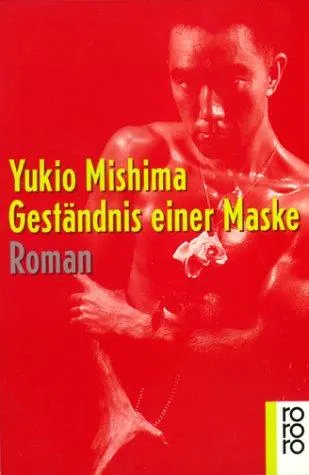
Mishima’s breakthrough novel shares Dazai’s fascination with living as a performance. Its narrator studies other people, rehearses normality, and constructs a socially acceptable self while concealing desires he cannot reconcile with that role. The kinship lies not merely in alienation but in the unnerving intelligence with which both narrators analyze their own disguises.
Mishima’s prose is more sculpted and sensuous than Dazai’s, full of beauty, morbidity, and theatrical control. That contrast makes the book essential: where Yozo’s mask seems to dissolve, Mishima’s narrator turns masking into an art. One of the defining works of modern Japanese literature, it is the natural next step for anyone haunted by Dazai’s question of whether a performed identity can ever become real.

Sasha Jansen moves through cheap hotels, cafés, memories, and humiliating encounters with the painfully alert passivity that makes Yozo unforgettable. She knows how others see her; she also knows how clothing, drink, rehearsed phrases, and bitter jokes can briefly hold a collapsing person together. Rhys captures the minute social injuries from which despair is built—a glance, a bill, an awkward silence—with almost unbearable accuracy.
Long neglected and now regarded as Rhys’s masterpiece, Good Morning, Midnight has inspired fierce devotion because its bleakness never becomes abstract. Its short, crystalline sentences make loneliness immediate and physical. If No Longer Human made you feel recognized in thoughts rarely admitted aloud, Rhys’s novel offers that same shock in a voice at once harder, funnier, and heartbreakingly vulnerable.
The Loser is for the reader who loved not just Dazai’s despair but the hypnotic momentum of a mind explaining its own ruin. Bernhard’s unnamed narrator circles around his friendship with two gifted pianists, one of them Glenn Gould, turning admiration into comparison, comparison into resentment, and resentment into a complete philosophy of failure. His relentless sentences repeat, revise, accuse, and contradict until thought itself becomes a trap.
Bernhard is one of the great postwar masters of the monologue, and this compact novel is among the purest expressions of his corrosive comic power. It is savagely funny where Dazai is plaintive, yet both understand self-consciousness as a form of captivity. Miss it, and you miss one of literature’s most exhilarating demonstrations of how brilliantly a person can reason his way toward self-erasure.