Author
Books like Octavia E. Butler
7 books we recommend to Octavia E. Butler readers, drawn from Parable of the Sower, Kindred and Fledgling — each with the reason why.
If you loved Parable of the Sower
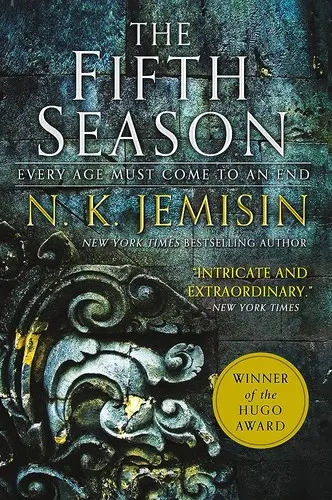
Jemisin matches Butler’s rare ability to make world-shattering speculation feel bodily and personal. In a civilization repeatedly devastated by geological catastrophe, people with the power to influence the earth are feared, exploited, and brutally trained. As in Parable of the Sower, preparedness is inseparable from power: who recognizes reality, who controls essential knowledge, and whose suffering society considers acceptable?
The prose can be fierce, intimate, and formally daring, yet the novel’s deepest achievement is its portrait of a woman forced to remake herself under unbearable pressure. It won the Hugo Award and began the first trilogy whose every volume won that prize. For Butler readers, it is one of the essential works that carries her uncompromising speculative tradition forward.
Where Butler writes collapse as violence and forced migration, Ling Ma finds apocalypse inside routine. Candace Chen keeps going to her Manhattan office as a strange fever empties the city; even the infected remain trapped in repetitive habits, endlessly performing familiar domestic gestures. It is funny until its comedy turns desolate.
Lauren understands early that old systems are dying. Candace’s difficulty is different and equally revealing: she has been trained so thoroughly by work and consumer life that imagining anything else becomes its own survival challenge. Published before COVID-19, Ma’s award-winning debut now has an uncanny reputation, but its lasting brilliance lies in its precision about labor, memory, and the dangerous comfort of habit. It will make Butler’s question—how do we learn to live otherwise?—feel newly strange.

This devastating novel examines the political weather that produces conviction. In a climate-ravaged United States fractured by a second civil war, young Sarat Chestnut grows up amid displacement, humiliation, and competing explanations of who is to blame. El Akkad watches ideology take hold through intimate needs: the desire for dignity, purpose, belonging, and someone willing to name an enemy.
That makes it a dark counterpoint to Lauren’s emerging philosophy. Both novels understand that belief is never merely abstract during catastrophe—it can organize a life, create a community, or turn injury into a weapon. El Akkad’s acclaimed debut refuses easy moral distance, giving national breakdown the scale of history and the closeness of a family wound. Readers moved by Butler’s unsentimental understanding of how damaged societies shape young people should not miss it.
If you loved Kindred
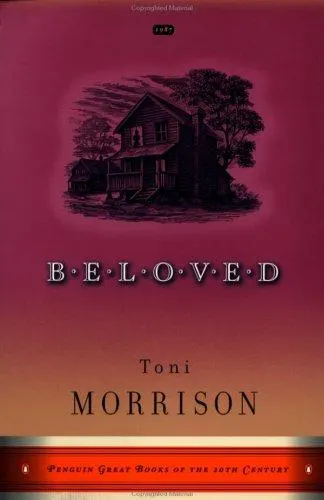
If Kindred made slavery feel not safely historical but physically present, Beloved takes that achievement somewhere even more haunting. Sethe has escaped slavery, yet her house is already occupied by what freedom could not leave behind. Morrison turns memory into an atmosphere—furious, intimate, and almost tangible—while confronting the terrible choices love can demand under an inhuman system.
The Pulitzer Prize only hints at the novel’s stature: Beloved permanently altered American fiction’s language for trauma and remembrance. Its prose is denser and more incantatory than Butler’s, but it has the same refusal to let readers observe suffering from a comfortable distance. Kindred opens the wound between ancestry and the present; Beloved makes that wound speak.
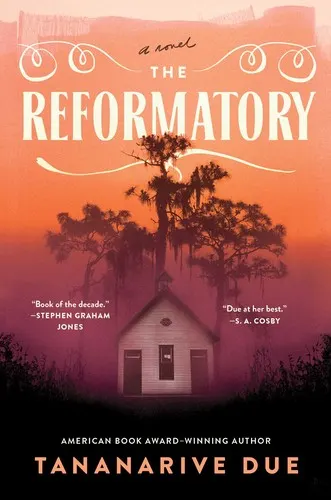
Twelve-year-old Robbie Stephens is sent to a brutal Florida reform school in 1950 after defending his sister—and he can see the dead boys who remain there. Due uses supernatural horror as Butler uses time travel: not as decoration, but as a way to make buried history immediate, bodily, and inescapable.
The novel combines painstaking historical truth with fierce narrative momentum. Robbie’s vulnerability, his sister’s determination to free him, and the institution’s machinery of racial terror create the same agonizing tension Kindred draws from Dana’s repeated captivity: survival requires courage, calculation, and compromises that outsiders may never understand. Winner of both the World Fantasy and Shirley Jackson awards, The Reformatory is already regarded as a modern landmark of historical horror—and it earns that standing page by page.
If you loved Fledgling
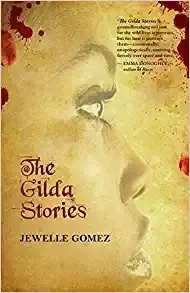
Gilda begins as a young Black woman escaping slavery in 1850s Louisiana and enters a sustaining community of women who practice vampirism according to an ethic of reciprocity: take blood, but leave something valuable in return.
That principle transforms the vampire from solitary predator into participant in a lineage. Across its sweeping chronology, the novel explores Black queer life, migration, loneliness, memory, and the hard work of maintaining family over time. Where Fledgling asks how a community built around bodily dependency might remain humane, Gomez imagines an answer founded on responsibility and mutual care. A winner of two Lambda Literary Awards, The Gilda Stories has become a foundational Black lesbian speculative novel—and its tenderness is every bit as memorable as its radical vision.
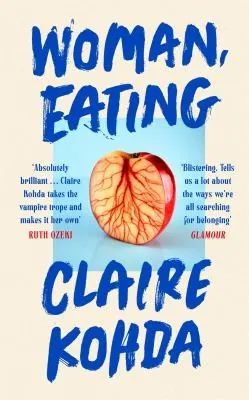
Lydia is a young artist, mixed-race and newly independent, trying to survive on packets of pig’s blood while everyone around her enjoys food she cannot share. Her vampirism is less a supernatural adventure than an inescapable bodily condition: appetite shapes her work, her shame, her relationships, and her uncertain sense of who she is allowed to become.
Kohda trades Fledgling’s clan politics for an intimate portrait of estrangement, but the kinship is powerful. Both novels treat hunger as morally complicated rather than inherently evil, and both connect the monstrous body to racialization, inheritance, and other people’s projections. Woman, Eating is a lean, incisive contemporary debut whose devoted admirers recognize it as far more than a clever vampire update: it captures, with painful precision, what it means to need nourishment from a world that has no comfortable place for you.