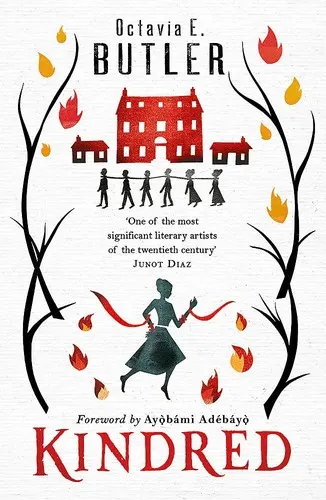
Books like Kindred
In all three novels, the past reaches into the room like a living hand: it marks bodies, rearranges families, and makes moral distance impossible.
If you liked Kindred, you’ll love these
Not lookalikes — kindred books. Each one shares something essential with Kindred, and we tell you exactly what.
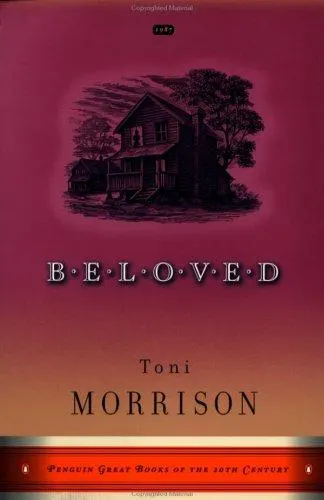
If Kindred made slavery feel not safely historical but physically present, Beloved takes that achievement somewhere even more haunting. Sethe has escaped slavery, yet her house is already occupied by what freedom could not leave behind. Morrison turns memory into an atmosphere—furious, intimate, and almost tangible—while confronting the terrible choices love can demand under an inhuman system.
The Pulitzer Prize only hints at the novel’s stature: Beloved permanently altered American fiction’s language for trauma and remembrance. Its prose is denser and more incantatory than Butler’s, but it has the same refusal to let readers observe suffering from a comfortable distance. Kindred opens the wound between ancestry and the present; Beloved makes that wound speak.
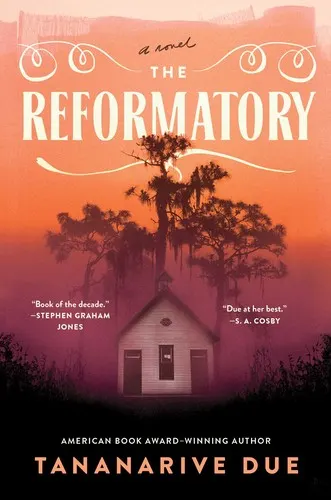
Twelve-year-old Robbie Stephens is sent to a brutal Florida reform school in 1950 after defending his sister—and he can see the dead boys who remain there. Due uses supernatural horror as Butler uses time travel: not as decoration, but as a way to make buried history immediate, bodily, and inescapable.
The novel combines painstaking historical truth with fierce narrative momentum. Robbie’s vulnerability, his sister’s determination to free him, and the institution’s machinery of racial terror create the same agonizing tension Kindred draws from Dana’s repeated captivity: survival requires courage, calculation, and compromises that outsiders may never understand. Winner of both the World Fantasy and Shirley Jackson awards, The Reformatory is already regarded as a modern landmark of historical horror—and it earns that standing page by page.
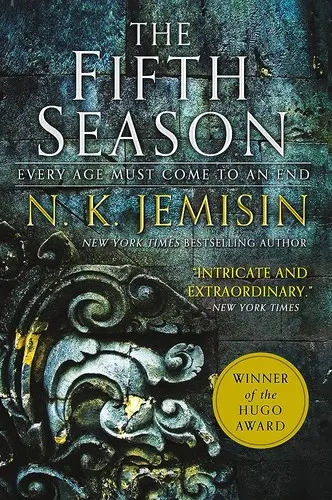
The Fifth Season begins with a murdered child and a world starting to break. From there, Jemisin builds a society that depends upon people it simultaneously fears, exploits, and controls. A reader who admired Butler’s ability to expose an entire system through one woman’s endangered body will recognize the method, even though the landscape here is invented from the ground up.
What makes the novel indispensable is its architecture: shifts in voice and perspective gradually reveal how oppression reshapes identity, parenthood, and even self-knowledge. The result is intellectually audacious but also raw with grief and fury. It won the Hugo Award for Best Novel and began the only trilogy whose every volume won that prize—a rare case in which formal acclaim matches the shock of encountering something genuinely new.