Author
Books like Monique Wittig
6 books we recommend to Monique Wittig readers, drawn from Les Guérillères and The Lesbian Body — each with the reason why.
If you loved Les Guérillères

Russ’s landmark feminist novel treats narrative coherence almost as an enemy collaborator. Four women—variations of one another—move through incompatible social realities, while the book interrupts itself with arguments, jokes, accusations, and sudden changes of voice. Like Wittig, Russ understands that gender is maintained not only by institutions but by grammar, storytelling, and the supposedly natural categories through which people recognize one another.
The result is furious, intellectually agile, and indecently funny. The Female Man became foundational to feminist science fiction because it does not merely depict alternatives; it makes the reader experience identity as unstable and politically manufactured. Anyone exhilarated by the collective “elles” of Les Guérillères should encounter Russ’s equally audacious demolition of the singular self.
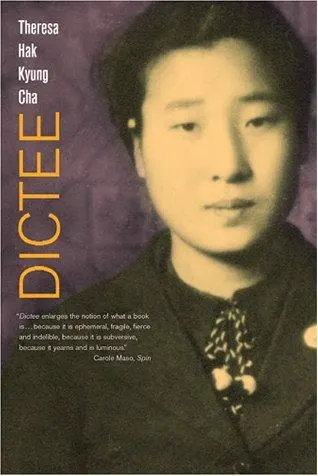
Dictee makes the page a contested territory. Photographs, handwriting, diagrams, untranslated French and Korean, dictation exercises, prayers, and fractured narratives gather around women whose voices have been suppressed by colonialism, migration, religion, and official history. Reading it feels less like following a conventional plot than entering a ritual of recovery—one in which broken language becomes evidence, lament, and resistance.
Cha’s only book, published shortly before her death, has become a touchstone of Asian American and experimental literature. Its kinship with Wittig lies in its refusal to let inherited syntax speak innocently: both books assemble a plural female presence from fragments and turn formal difficulty into political force. Dictee is one of those rare works that permanently enlarges one’s sense of what a novel can contain.
Ninety-two-year-old Marian Leatherby receives a hearing trumpet and discovers that her family intends to send her to an institution. From that wickedly simple opening, Carrington begins loosening every bolt in respectable reality. Her prose is serene while the world becomes increasingly unruly; old women, occult traditions, institutional authority, and patriarchal common sense are rearranged with surrealist precision and anarchic delight.
Where Wittig is incantatory and militant, Carrington is mischievous and cosmically irreverent—but both create feminist countermyths rather than merely criticizing existing ones. Long cherished as a cult classic, The Hearing Trumpet offers the rare pleasure of a novel whose liberation is felt in its imagination: strange, communal, comic, and utterly unwilling to behave.
If you loved The Lesbian Body
Brossard is Wittig’s closest companion here: another major lesbian feminist modernist for whom language is not a vessel but contested flesh. Five women gather around love, art, mathematics, and political thought, while the novel fractures narrative into conversations, diagrams, wordplay, and charged abstractions.
What initially looks cerebral becomes intensely erotic. Brossard asks how lesbians might make forms adequate to lives that inherited syntax cannot contain. A foundational work of Quebec’s literary avant-garde, Picture Theory offers the rare exhilaration of watching lesbian desire produce not merely a story but an entire way of thinking.
Read Acker for the violence Wittig does to literary propriety. Her cult punk novel splices crude drawings, dream maps, stolen texts, pornography, fairy tale, and language exercises into the story of Janey Smith—a girl whose body is repeatedly claimed, displayed, disciplined, and rewritten.
Acker’s world is harsher and more contaminated by patriarchal fantasy than Wittig’s, but she shares Wittig’s conviction that conventional prose carries conventional power. The book’s ugliness is purposeful, its obscenity insurgent; every broken form becomes an attempt to escape the identities imposed by ordinary language. Few novels make the page itself feel so bodily, wounded, and dangerous.
Bellamy takes Mina from Dracula and lets her possess the author’s body, turning a familiar literary woman into a ravenous queer voice moving through sex, friendship, jealousy, illness, and San Francisco’s artistic underground. The conceit quickly becomes more intimate and stranger than parody: possession is a method for asking where one woman’s body or voice ends and another’s begins.
The novel’s promiscuous form—letters, confession, criticism, gossip, erotic reverie—gives intellectual argument the heat of lived appetite. Long cherished as a cult classic of queer experimental writing, it has the reckless intelligence Wittig’s readers recognize: theory becomes lust, abjection becomes comedy, and the female monster refuses to stay either metaphorical or safely contained.