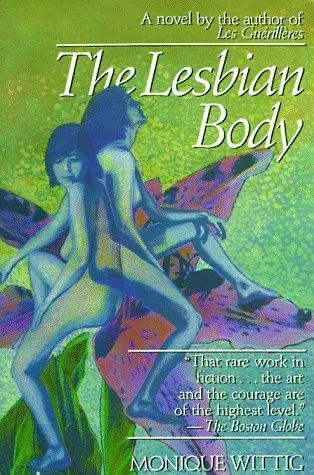
Books like The Lesbian Body
Wittig’s book remains inexhaustible because it makes desire a solvent: anatomy, grammar, myth, and the sovereign self all come apart under its pressure. These three novels pursue that liberation by strikingly different routes.
If you liked The Lesbian Body, you’ll love these
Not lookalikes — kindred books. Each one shares something essential with The Lesbian Body, and we tell you exactly what.
Brossard is Wittig’s closest companion here: another major lesbian feminist modernist for whom language is not a vessel but contested flesh. Five women gather around love, art, mathematics, and political thought, while the novel fractures narrative into conversations, diagrams, wordplay, and charged abstractions.
What initially looks cerebral becomes intensely erotic. Brossard asks how lesbians might make forms adequate to lives that inherited syntax cannot contain. A foundational work of Quebec’s literary avant-garde, Picture Theory offers the rare exhilaration of watching lesbian desire produce not merely a story but an entire way of thinking.
Read Acker for the violence Wittig does to literary propriety. Her cult punk novel splices crude drawings, dream maps, stolen texts, pornography, fairy tale, and language exercises into the story of Janey Smith—a girl whose body is repeatedly claimed, displayed, disciplined, and rewritten.
Acker’s world is harsher and more contaminated by patriarchal fantasy than Wittig’s, but she shares Wittig’s conviction that conventional prose carries conventional power. The book’s ugliness is purposeful, its obscenity insurgent; every broken form becomes an attempt to escape the identities imposed by ordinary language. Few novels make the page itself feel so bodily, wounded, and dangerous.
Bellamy takes Mina from Dracula and lets her possess the author’s body, turning a familiar literary woman into a ravenous queer voice moving through sex, friendship, jealousy, illness, and San Francisco’s artistic underground. The conceit quickly becomes more intimate and stranger than parody: possession is a method for asking where one woman’s body or voice ends and another’s begins.
The novel’s promiscuous form—letters, confession, criticism, gossip, erotic reverie—gives intellectual argument the heat of lived appetite. Long cherished as a cult classic of queer experimental writing, it has the reckless intelligence Wittig’s readers recognize: theory becomes lust, abjection becomes comedy, and the female monster refuses to stay either metaphorical or safely contained.