Author
Books like Mariam Petrosyan
3 books we recommend to Mariam Petrosyan readers, drawn from The Gray House — each with the reason why.
If you loved The Gray House
Sokolov’s narrator, a student at a Soviet “special school,” speaks from a consciousness divided against itself. Time doubles back, identities blur, and sentences follow association rather than ordinary chronology. As in The Gray House, difference is not reduced to diagnosis: it becomes a distinct way of perceiving reality.
The deepest kinship lies in how the novel makes confusion intimate rather than merely puzzling. You gradually learn to hear the emotional truth inside its contradictions—especially the narrator’s longing, fear, and fixation on a beloved teacher. Nabokov admired the book, and it is now regarded as a landmark of Russian postmodern prose. For anyone who loved piecing together Petrosyan’s unstable voices and timelines, this brief, strange, aching novel is indispensable.
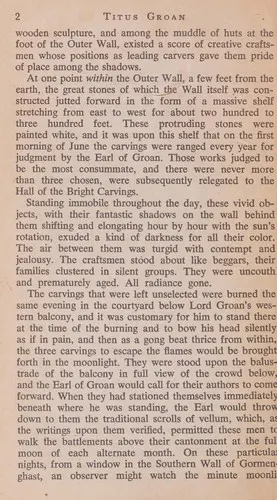
Gormenghast is a castle so immense that its architecture has become a social order. The birth of an heir sets its inhabitants moving through ceremonies whose origins scarcely matter anymore: what matters is that every gesture, corridor, rivalry, and office has acquired ritual force.
Peake’s great gift is population. His grotesque names and extravagant portraits initially seem comic, then gather menace and pathos as the castle’s hierarchy comes alive. Like Petrosyan, he makes an enclosed community feel more complete than the outside world, while leaving you unsure whether its traditions preserve its people or imprison them. Titus Groan became a cult cornerstone of imaginative literature because Gormenghast is not a backdrop but a place readers remember as though they had lived there. Leaving it unexplored would be a genuine loss.
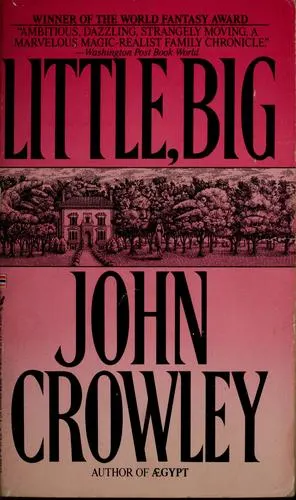
Smoky Barnable walks toward Edgewood, an eccentric house built according to several incompatible architectural plans, to marry into a family whose history may be entangled with another world. From that modest beginning, Crowley constructs a private mythology out of family stories, old photographs, repeated names, half-believed prophecies, and rooms that never quite submit to measurement.
This is the recommendation for readers who loved the way The Gray House refuses to separate legend from memory or fantasy from communal truth. Crowley never crudely resolves the uncertainty; he lets wonder accumulate until disbelief feels less reasonable than belief. Winner of the World Fantasy Award and sustained by an unusually devoted readership, Little, Big is capacious, melancholy, funny, and finally overwhelming. Few novels better reproduce the feeling that a book has quietly enlarged the world beyond its covers.