Books like A School for Fools
Readers who cherish Sokolov tend to enjoy fiction in which language itself becomes unstable, consciousness splits and doubles, and comedy keeps opening unexpectedly onto grief, beauty, and metaphysical terror.
If you liked A School for Fools, you’ll love these
Not lookalikes — kindred books. Each one shares something essential with A School for Fools, and we tell you exactly what.
Erofeev’s narrator boards a suburban train carrying a suitcase of alcohol and a mind crammed with scripture, revolutionary rhetoric, cocktail recipes, private sorrow, and impossible tenderness. Like Sokolov, Erofeev makes a socially discarded consciousness the source of the book’s highest poetry: apparent incoherence becomes a devastatingly exact way of perceiving the world.
This samizdat classic is sacred and profane, erudite and helplessly funny, with every digression deepening its peculiar music. It offers the closest Russian counterpart to Sokolov’s miracle of turning degradation into lyric radiance.
Donoso’s great labyrinth begins among decaying houses, old women, servants, rumors, and concealed histories; soon voices and identities seem to seep into one another. If the divided narrator and liquid reality of A School for Fools felt liberating rather than merely difficult, this is the more nightmarish masterpiece waiting beyond it.
A major achievement of the Latin American Boom, the novel has the density of myth and the tactile force of hallucination. Its transformations are not puzzles to solve but experiences to undergo: bodies, names, buildings, and stories become unstable together. Few novels make madness feel so architecturally complete.
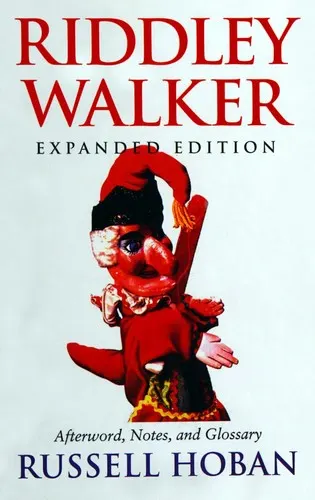
Riddley speaks in a broken, reinvented English that initially slows the eye and then rewires it. His misspellings, puns, folk sayings, and mistaken etymologies do not decorate the narrative; they create his reality. That is the deepest kinship with Sokolov: both novels ask us to inhabit a mind through the pressure and play of its language rather than observe it from outside.
Hoban’s cult classic is funny, frightening, and unexpectedly tender, with a young narrator whose verbal peculiarities reveal intellectual and emotional depths others cannot recognize. Once its idiom clicks, ordinary English briefly seems impoverished by comparison.