Author
Books like Luo Guanzhong
5 books we recommend to Luo Guanzhong readers, drawn from Romance of the Three Kingdoms and Water Margin — each with the reason why.
If you loved Romance of the Three Kingdoms
Yoshikawa turns Japan’s age of civil war into the kind of immense, intimate drama that makes Three Kingdoms irresistible. Its central figure begins in obscurity, but his appetite, wit, and instinct for people gradually place him among generals and rulers. Campaigns matter because Yoshikawa shows the human machinery behind them: wounded pride, calculated generosity, divided loyalties, and the ability to recognize talent before an opponent does.
Yoshikawa was one of Japan’s most beloved historical novelists, and Taiko displays why. Its enormous cast never feels like a ledger; leaders acquire distinct strategic temperaments, and advancement always has a moral price. If you relish watching capable people maneuver through a collapsing order—and seeing character become destiny—this sweeping epic is indispensable.
Dawn opens the landmark Japanese space-opera series Legend of the Galactic Heroes, but its true territory is political history. Across a war between an autocratic empire and a decaying democracy, two unusually gifted commanders study not only fleets but institutions, public opinion, incompetent superiors, and the motives of the enemy.
The kinship with Three Kingdoms lies in Tanaka’s fascination with strategic intelligence under political constraint. Winning a battle may strengthen a corrupt regime; loyalty may require disobedience; a brilliant plan can be ruined by vanity far from the front. Tanaka also grants dignity and intelligence to opposing sides rather than arranging a simple contest between heroes and villains. The resulting ten-volume saga inspired an extraordinarily devoted readership and major adaptations in Japan. Dawn is where that vast chessboard first becomes impossible to leave.
If you loved Water Margin
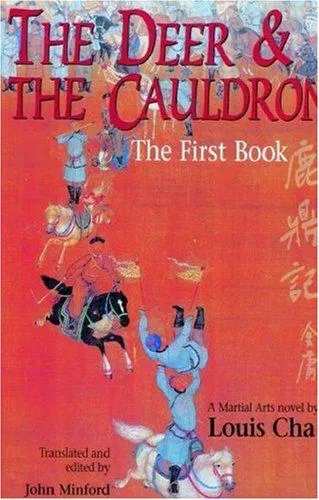
Wei Xiaobao is an inspired companion to the heroes of Liangshan: a brothel-raised scoundrel who survives through quick talk, shameless improvisation, and an elastic sense of honor. Swept between the imperial court and a secret brotherhood, he discovers that loyalty becomes dangerously complicated when rival worlds both claim him.
This was Jin Yong’s final novel, and it mischievously overturns the chivalric tradition he helped define. Its conspiracies and martial exploits are thrilling, but its deepest pleasure is watching an irrepressible rogue expose the compromises hidden inside heroic codes. Anyone fascinated by Water Margin’s tension between outlaw fellowship and service to authority should not miss Jin Yong’s funniest, most subversive answer to it.
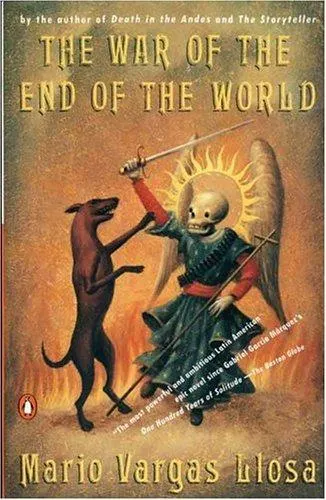
In the impoverished backlands of Brazil, the Counselor attracts beggars, bandits, zealots, and people discarded by respectable society. Vargas Llosa gives each faction its own convictions and blindness, then sets this improvised community against a state incapable of understanding it.
Like Water Margin, the novel expands by gathering unforgettable figures until individual grievances become a whole alternative society. Yet it refuses to romanticize either rebellion or official order: bravery, fanaticism, cruelty, and solidarity remain inseparable. Widely regarded as one of Vargas Llosa’s masterpieces, it has the scale of legend and the close-grained human confusion of lived history—a monumental novel that earns every page.
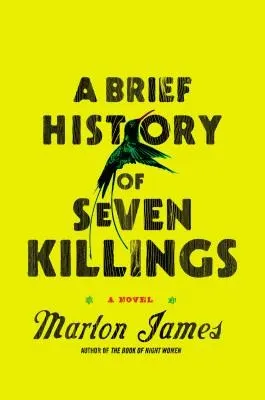
Marlon James builds his novel from voices that seize the page: gunmen, gang leaders, politicians, intelligence agents, ghosts, and frightened bystanders, each speaking in an unmistakable rhythm. The result has Water Margin’s crowded, combustible vitality—the sense that every minor character might suddenly reveal a history, a grievance, or a lethal talent.
Its violence is frightening rather than decorative, while its alliances are governed by the same volatile mixture of brotherhood, fear, ambition, and betrayal that animates Liangshan. Winner of the 2015 Booker Prize, it is also a feat of vernacular storytelling: difficult at first, then hypnotic. Once its chorus takes hold, few modern novels feel so dangerously alive.