Author
Books like Larry Watson
3 books we recommend to Larry Watson readers, drawn from Montana 1948 — each with the reason why.
If you loved Montana 1948
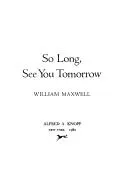
Like Larry Watson, Maxwell achieves extraordinary force through restraint. An older narrator looks back on his Illinois childhood, a murder between neighboring farmers, and one small failure of friendship that has troubled him ever since. The suspense lies less in discovering what happened than in understanding how violence enters ordinary lives—and how memory keeps revising guilt.
Winner of the William Dean Howells Medal, this brief, exquisitely constructed novel has become a quiet classic. Its compassion never softens its moral seriousness. If the retrospective voice and devastating economy of Montana 1948 stayed with you, Maxwell’s final pages will feel almost inescapably moving.
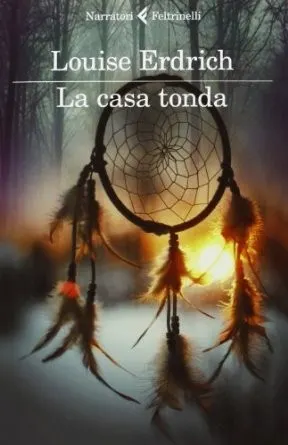
Thirteen-year-old Joe Coutts lives on a North Dakota reservation, where an attack on his mother exposes gaps in the law and destabilizes his family. As in Montana 1948, a boy discovers that adults, institutions, and justice itself are far less reliable than he believed—and that pursuing the truth may demand choices no child should have to make.
Erdrich gives Joe’s story humor, appetite, friendship, and adolescent recklessness alongside its gathering moral weight. That fullness makes the darkness more powerful, not less. The novel won the National Book Award, and deservedly so: it turns a legal injustice into an intimate, unforgettable test of love, loyalty, and conscience.
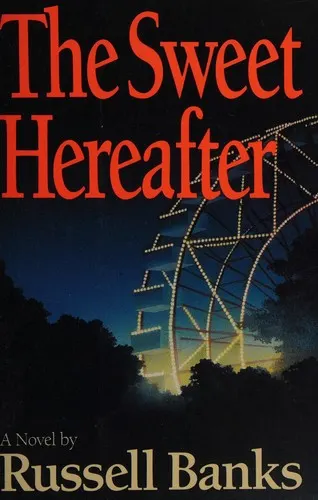
A catastrophic school-bus accident leaves a small town searching for someone to blame. Banks tells the aftermath through several sharply distinct voices—the driver, a grieving father, a lawyer, and a teenage survivor—so that every apparent certainty acquires another edge.
Where Watson concentrates moral pressure within one family, Banks lets it travel through an entire community. Both writers understand that respectable people can be compromised without becoming monsters, and that public ideas of justice rarely contain the whole truth. The result is an austere, humane novel whose emotional impact accumulates almost invisibly; by the time you recognize its full design, it has already closed around you.