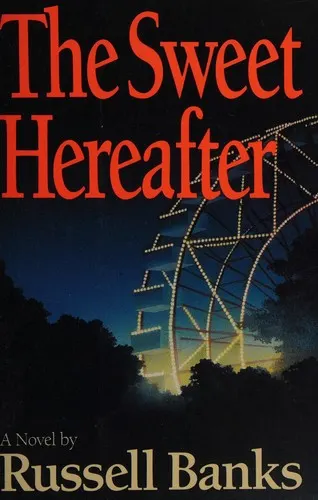
Books like The Sweet Hereafter
The Sweet Hereafter understands that catastrophe does not give a community one shared story; it exposes the incompatible stories its members need in order to survive.
If you liked The Sweet Hereafter, you’ll love these
Not lookalikes — kindred books. Each one shares something essential with The Sweet Hereafter, and we tell you exactly what.
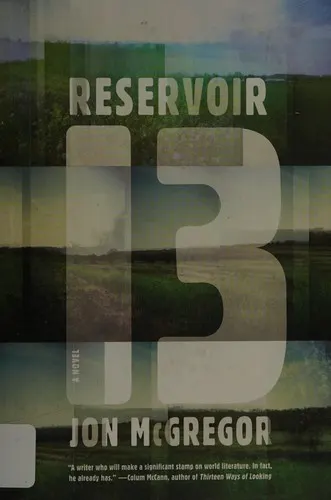
A thirteen-year-old girl disappears from an English village, but McGregor refuses to turn her absence into a conventional mystery. Instead, he follows the village through successive seasons: searches continue, rumors circulate, marriages strain, children grow, foxes breed, reservoirs rise and fall. The result is a communal portrait in which grief becomes both ever-present and strangely absorbed into ordinary time.
That patient, unsentimental attention to collective life is the deepest link to Banks. Like The Sweet Hereafter, this Costa Prize-winning novel asks what happens after public concern recedes and those left behind must keep inhabiting the altered world. Its accumulating rhythms exert an extraordinary power; by the end, the village feels less like a setting than a living consciousness.
Maxwell’s brief, revered masterpiece begins with an old man looking back at a murder that shattered two Illinois farm families—and at the childhood friend he failed when friendship mattered most. He reconstructs what he could not have fully known, moving between memory, imagination, shame, and compassion with astonishing delicacy.
A reader who loved Banks’s refusal to divide people neatly into victims, villains, and witnesses will recognize Maxwell’s moral intelligence. Every quiet detail enlarges the tragedy without sensationalizing it, and the narrator’s uncertainty becomes the book’s source of honesty. Few novels say so much about guilt and belated understanding in so little space; its final emotional force is almost disproportionate to its size.
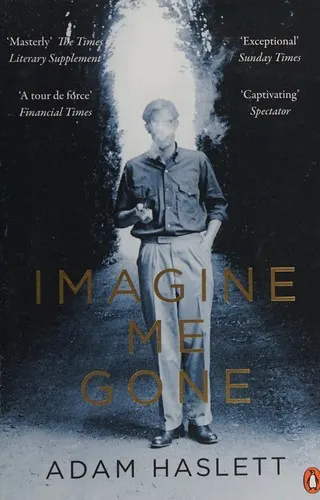
Haslett gives each member of one family a distinct voice as they live with the gravitational pull of a father’s depression: Margaret’s stubborn devotion, Alec’s watchful intelligence, Celia’s practicality, and Michael’s brilliant, exhausting torrents of music, politics, jokes, and fear. No single account controls the family’s meaning; love appears by turns as rescue, obligation, blindness, and endurance.
That polyphonic design will feel immediately right to a reader of The Sweet Hereafter, but Haslett uses it to create a more intimate kind of community—one whose members cannot escape one another’s pain. A Pulitzer finalist, Imagine Me Gone has earned particular devotion for Michael, one of contemporary fiction’s most vivid and heartbreaking voices. The novel is devastating, often very funny, and incapable of treating suffering as either spectacle or lesson.