Author
Books like Kij Johnson
5 books we recommend to Kij Johnson readers, drawn from The Fox Woman and Fudoki — each with the reason why.
If you loved The Fox Woman
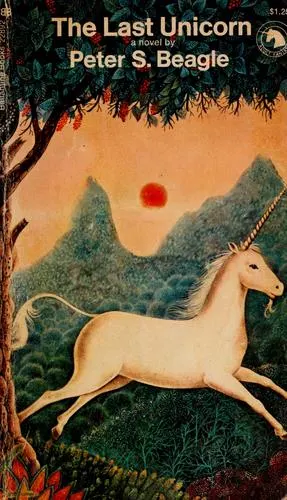
Beagle understands, as Johnson does, that giving a mythical creature a voice should make her stranger, not merely more human. His unicorn leaves her protected forest after hearing that she may be the last of her kind, entering a world whose inhabitants alternately fail to recognize her and yearn to claim her.
The kinship lies in its lucid melancholy: both novels ask what love costs a being who cannot fit inside a human idea of love. Beagle’s wit keeps the story from becoming precious, while his piercingly beautiful prose gives every enchantment an undertow of loss. Its status as a beloved fantasy classic is richly deserved; readers return to it because its final emotional truths seem to deepen with age.
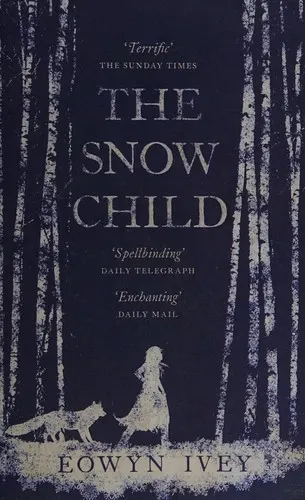
On an isolated Alaskan homestead, a childless couple builds a girl out of snow; soon afterward, they glimpse a mysterious child moving through the woods. Ivey sustains the crucial uncertainty—miracle, folktale, or ordinary life seen through desperate hope—without reducing it to a puzzle.
A reader who loved Johnson’s fox woman will recognize the tension between tenderness and capture. The girl’s wildness is not a charming obstacle to be cured, and the landscape is not scenery but a force that shapes what kinds of love are possible. This Pulitzer Prize finalist has the intimate ache of a marriage novel and the radiance of an old tale told beside a winter fire.
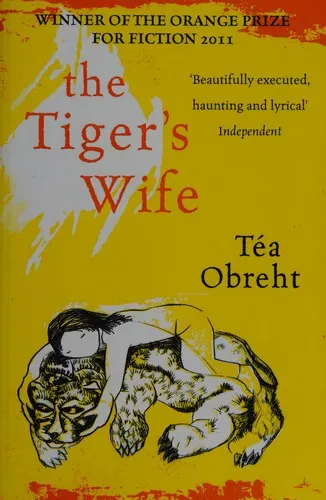
Obreht begins with a young doctor trying to understand her grandfather’s death, then opens the story outward through the tales he carried: of a deathless man, a village stalked by a tiger, and the ostracized woman drawn into the animal’s orbit. Folklore here is not decorative magic; it is how people preserve forbidden sympathies and make grief bearable.
Johnson’s shifting accounts and half-glimpsed transformations find a powerful counterpart in Obreht’s layered storytelling. Each version alters the emotional meaning of the others, while the tiger remains magnificently resistant to explanation. Obreht won the Orange Prize for this debut at twenty-five, but the precocity matters less than the novel’s lasting spell: sensuous, eerie, and wise about all that stories conceal while pretending to reveal.
If you loved Fudoki
A novelist named Ruth finds a barnacled lunchbox containing the diary of Nao, a bullied Tokyo schoolgirl who has begun writing about her 104-year-old Buddhist great-grandmother. From that arresting opening, Ozeki constructs an intimate correspondence between women who may never meet, across an ocean and perhaps across time itself.
Like Fudoki, this Booker-shortlisted novel understands a manuscript as both artifact and lifeline. Nao writes to keep herself from vanishing; Ruth reads to restore shape to another person’s existence. Ozeki’s play with time, authorship, mortality, and Buddhist impermanence never smothers the vulnerable human voices at its center. It is funnier and more contemporary than Fudoki, but it produces the same haunting sense that reading someone’s story may alter what that life was.
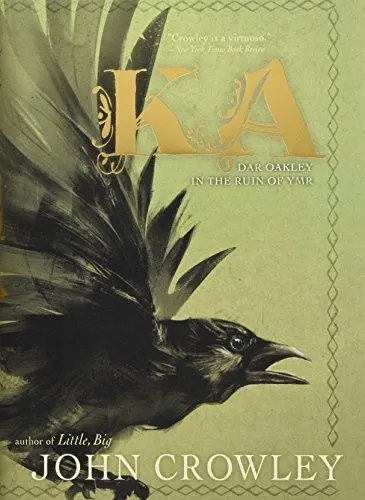
An aging man encounters a crow who can speak, and the crow begins recounting the many lives he has spent alongside humankind. Crowley does not turn Dar Oakley into a feathered person: his hungers, attention, memory, and sense of death remain persuasively other. That achievement will feel immediately precious to anyone captivated by Johnson’s passage between feline and human awareness.
Crowley, long revered by other fantasy writers for the beauty and intelligence of Little, Big, makes this animal autobiography an immense meditation on mortality and storytelling. Civilizations pass; names and beliefs mutate; the crow watches humans invent meanings for the world and is changed by those meanings in return. Ka has Fudoki’s rare combination of strangeness, tenderness, and grief—the feeling that to acquire a story is to acquire a soul, and therefore the knowledge that a soul can be lost.