Author
Books like John Fowles
6 books we recommend to John Fowles readers, drawn from The Magus and The Collector — each with the reason why.
If you loved The Magus
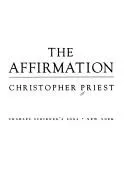
Peter Sinclair retreats to the country and begins writing about an invented island world; soon, authorship, memory, and identity cease to fit into dependable categories. Like Fowles, Priest makes uncertainty sensuous and intimate: the puzzle is inseparable from a young man’s need to turn disappointment into a grand design.
This is one of the defining novels of Priest’s celebrated career, an elegant Möbius strip whose apparent contradictions are precisely engineered. Readers who finish The Magus wanting another book that changes the meaning of its own earlier pages should not miss it.
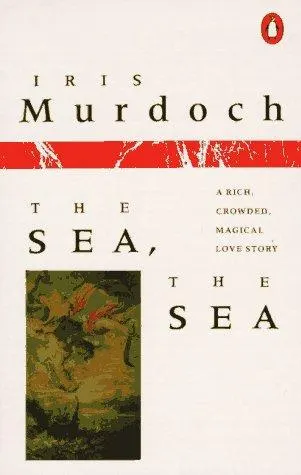
Charles Arrowby, a famous theatre director, retires to the coast intending to write his memoirs and master his desires. Instead, the people around him stubbornly resist the roles he assigns them—especially when a woman from his past reappears.
Murdoch turns the charismatic, self-dramatizing male consciousness inside out. Charles is intelligent, cultivated, persuasive, and catastrophically gifted at mistaking obsession for revelation. The result has the psychological cruelty and theatrical manipulation of The Magus without requiring an external Conchis: Charles constructs the trap himself. Winner of the Booker Prize, it is both ferociously funny and morally unsettling, a major novel about the stories desire tells in order to call itself destiny.
A fugitive hiding on an apparently deserted island discovers a group of elegant visitors who behave as though he does not exist. Among them is Faustine, whose unreachable presence becomes an obsession. From that simple disturbance, Bioy Casares builds a flawless mechanism of desire, illusion, repetition, and reality’s unreliability.
Borges famously praised its plot as perfect, and the novella has become a foundational work of metaphysical fiction. It offers in concentrated form one of The Magus’s most intoxicating pleasures: the suspicion that romance and elaborate artifice may be the same enchantment. Barely longer than an afternoon’s reading, it can haunt the imagination for years.
If you loved The Collector
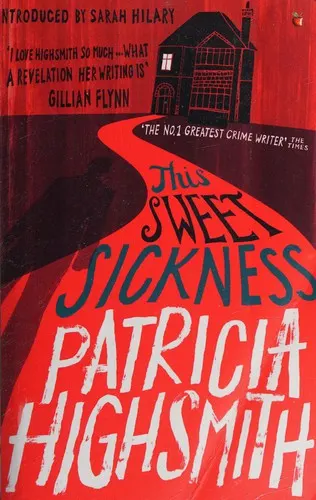
David Kelsey has built his life around a woman who rejected him—and around the fantasy that she has not really rejected him at all. Highsmith keeps the reader unnervingly close to his orderly, self-protecting mind, where obsession dresses itself as fidelity and every contrary fact can be explained away.
Like Fowles, she understands that the most frightening monster is not irrational: he is industriously reasonable, wounded, and convinced of his own delicacy. Few novelists have matched Highsmith’s gift for making moral deformity feel intimate and almost airless. This is among her purest studies of obsession, and anyone fascinated by Frederick Clegg’s bland self-justification should find it horribly irresistible.
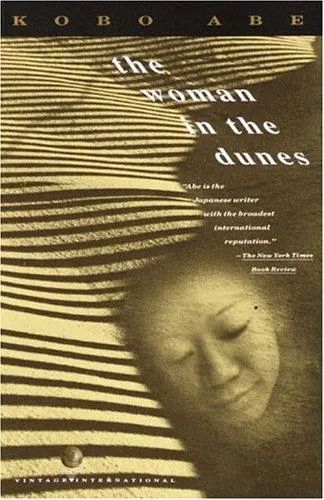
An amateur entomologist visiting a remote settlement descends into a sand pit containing a woman’s house—and discovers that leaving will not be simple. From that stark premise, Abe creates a tactile nightmare of sand, sweat, labor, resentment, and unstable power.
The kinship with The Collector lies not merely in confinement but in the questions confinement exposes: Is another person a companion, an instrument, or a possession? What remains of identity when resistance becomes routine? Winner of Japan’s Yomiuri Prize and the novel that established Abe internationally, it has the inexhaustible strangeness of a modern myth. Its physical world is so convincing that the sand seems to work its way into the reader’s clothes.

Barbara Covett, a lonely, caustic schoolteacher, begins chronicling the downfall of a younger colleague. Her voice is witty, observant, and dangerously persuasive; only gradually does the emotional claim she has staked on another person become unmistakable.
Heller reproduces one of Fowles’s sharpest effects: the distance between what a narrator believes about herself and what every sentence reveals. Barbara’s intelligence makes her possessiveness subtler than Clegg’s, but not less chilling; pity, class resentment, contempt, and hunger continually change masks. Shortlisted for the Booker Prize, this compact novel is both viciously funny and psychologically exact—a masterclass in how loneliness turns other people into private property.