Author
Books like John Dos Passos
3 books we recommend to John Dos Passos readers, drawn from Manhattan Transfer — each with the reason why.
If you loved Manhattan Transfer
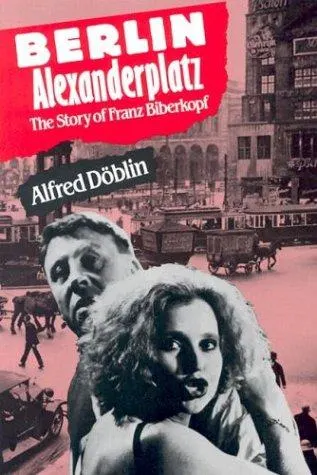
Döblin’s 1929 modernist landmark begins with Franz Biberkopf leaving prison, but his attempted return to ordinary life is only one current in a much larger torrent. Advertisements, songs, news reports, biblical language, tram routes, and street cries interrupt the narrative until Berlin itself seems to be speaking.
If you loved the cinematic cuts and documentary fragments of Manhattan Transfer, Döblin’s montage will feel both familiar and startlingly unruly. Yet this is no mere German counterpart: its language presses more intimately against one battered consciousness while revealing the economic and social machinery surrounding him. One of the indispensable city novels of European modernism, it turns urban noise into tragic music.
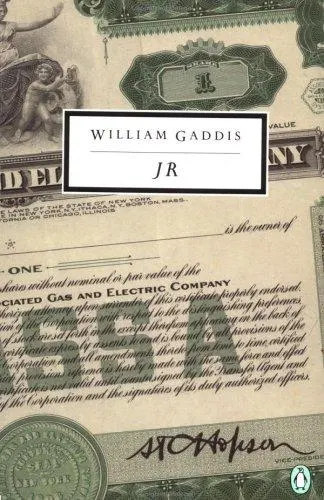
Where Dos Passos constructs his world through rapid visual cuts, Gaddis builds one almost entirely from overheard speech. An eleven-year-old schoolboy discovers that telephones, mail, and borrowed authority can assemble a financial empire; around him, adults talk incessantly without quite hearing one another.
The result is a ferociously funny auditory montage of capitalism at work. Voices collide, identities blur, and unfinished sentences carry from one scene into another, creating the same exhilarating sense that individual lives are being conducted by a vast impersonal system. Winner of the National Book Award, J R is famously demanding, but its difficulty is purposeful: once your ear adjusts, the apparent chaos becomes one of the most exact—and funniest—social compositions in American fiction.

Selvon opens with Moses Aloetta heading to Waterloo Station to meet another newly arrived Caribbean migrant. From there the novel expands into a loose constellation of rooms, jobs, friendships, dances, humiliations, schemes, and fleeting pleasures.
What connects it most deeply to Manhattan Transfer is its refusal to subordinate a crowd to a single conventional plot. Selvon lets recurring figures flare into view, disappear, and return transformed by the city. But his great innovation is linguistic: the narration itself moves in a supple Caribbean vernacular, giving the collective a warmth and intimacy absent from official accounts of postwar London. Published in 1956, it became a foundational Black British novel because it did not merely portray marginalized voices—it allowed those voices to remake the sound of the English novel.