Author
Books like John Dickson Carr
5 books we recommend to John Dickson Carr readers, drawn from The Burning Court, He Who Whispers and The Case of the Constant Suicides — each with the reason why.
If you loved The Burning Court
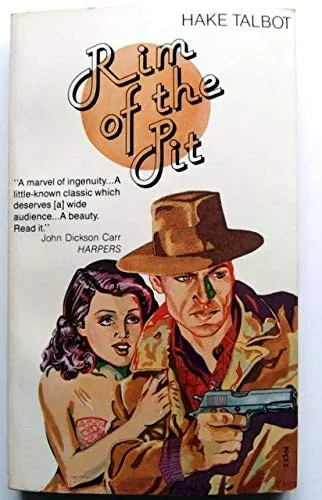
At an isolated, snowbound lodge, a séance is arranged to obtain a dead man’s consent to a business scheme. From that deliciously dubious premise, Talbot constructs a contest between occult terror and exacting fair-play detection.
Like The Burning Court, it keeps rational and supernatural explanations alive simultaneously, piling impossibility upon impossibility without dispelling the wintry dread. Its audacity is legendary among locked-room devotees: in Edward D. Hoch’s celebrated 1981 poll of experts, it placed second only to Carr’s The Hollow Man. Anyone who loves Carr at his most extravagant should experience the rare novel enthusiasts have spent decades pressing into one another’s hands.
A detective prevents a young woman from killing herself and hears why she has lost hope: a sequence of uncannily accurate predictions now culminates in the appointed hour of her father’s death.
Woolrich offers less of Carr’s architectural playfulness but matches his unnerving question: what happens when evidence begins to favor the impossible? Every attempt to investigate the prophecy tightens its hold, turning clocks, streets, and ordinary coincidences into instruments of dread. Woolrich, one of noir’s defining writers, was unmatched at making fatalism physically palpable. If The Burning Court’s lingering supernatural doubt mattered as much as its solution, this novel’s gathering darkness is indispensable.
If you loved He Who Whispers
A teacher is dismissed after witnesses report seeing her in places she could not possibly have been. Like Fay Seton, she becomes both suspected monster and vulnerable human being; McCloy makes our sympathy for her intensify, rather than dispel, the unease.
Often regarded as McCloy’s masterpiece, this is an unusually intelligent fusion of impossible crime, psychological insight, and doppelgänger horror. Its chill comes not from theatrical darkness but from the gradual corruption of ordinary reality. If the most haunting part of He Who Whispers was its uncertainty over whether detection can truly banish dread, this is essential.
If you loved The Case of the Constant Suicides
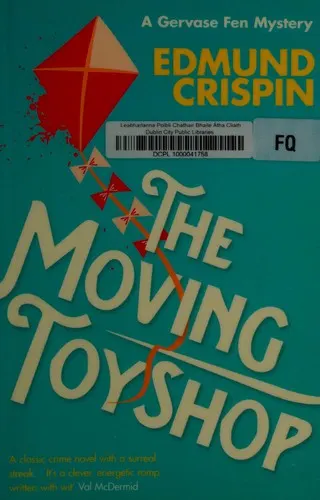
A poet enters an Oxford toyshop, discovers a corpse, and returns to find that the entire shop has vanished. From that splendid opening, Crispin builds a mystery as ingenious as it is gleefully unruly.
Like Carr, he understands that farce can sharpen rather than weaken an impossible crime. Eccentric detective Gervase Fen charges through literary jokes, arguments, chases, and inspired silliness, yet the vanishing shop remains a genuine puzzle with a satisfyingly concrete answer. Long regarded as Crispin’s masterpiece, The Moving Toyshop is the closest thing to recapturing the Campbell clan’s combination of intellectual trickery and comic bedlam.
A demonologist is found murdered inside a room apparently sealed against intrusion, surrounded by the ominous apparatus of his profession. The suspects—magicians, mediums, astrologers, and escape artists—know more than most people about manufacturing miracles.
Rawson was himself a professional magician, and that expertise gives the novel an unusual tactile persuasiveness: doors, windows, sightlines, timings, and misdirection all matter. His magician-detective, the Great Merlini, tackles an extravagant succession of impossibilities without draining them of wonder. A foundational American locked-room mystery, this is essential reading for anyone who admired how Carr makes an outrageous solution feel not merely possible but inevitable.