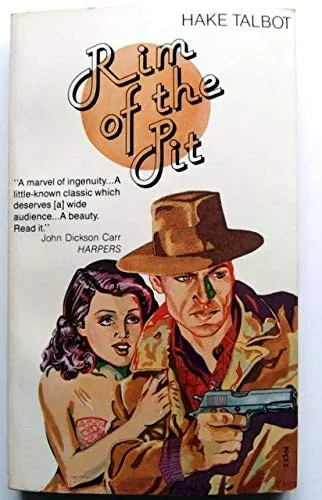
Books like Rim of the Pit
Rim of the Pit and John Dickson Carr’s The Burning Court stand together at the eerie border where a detective story begins to look alarmingly like a ghost story.
If you liked Rim of the Pit, you’ll love these
Not lookalikes — kindred books. Each one shares something essential with Rim of the Pit, and we tell you exactly what.
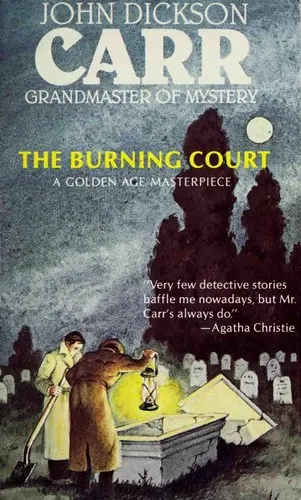
Carr sustains the same thrilling doubt Talbot creates: are these impossibilities ingenious human contrivances, or has the supernatural genuinely entered the room? It begins with an old photograph whose subject appears to be the living image of a contemporary woman, then draws poison, burial and historical witchcraft into an atmosphere of gathering dread.
Often considered Carr’s finest fusion of Gothic horror and impossible-crime detection, it is less a puzzle decorated with spookiness than a haunting in which logic itself feels endangered. Its audacious ending has kept readers arguing for decades. Anyone who relished Talbot’s refusal to let rational explanation dispel the chill should regard this as essential.
A teacher is dismissed after colleagues and pupils report seeing her in two places at once. McCloy turns that simple impossibility into something intimate and unnerving: the terror of becoming a spectator to one’s own inexplicable double.
Basil Willing investigates with psychological intelligence rather than theatrical swagger, and McCloy’s controlled, lucid prose makes each uncanny incident more persuasive. The book is widely regarded as her masterpiece and one of the great novels of supernatural ambiguity. Where Rim of the Pit assaults a crowded house with wonders, this quietly poisons ordinary reality; its chill is subtler and may last even longer.
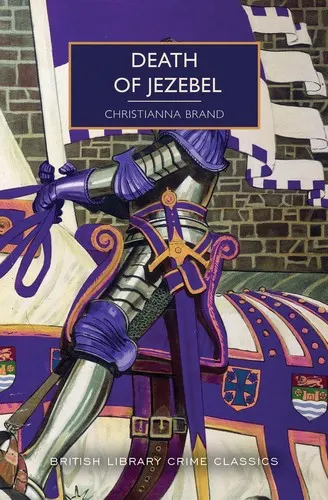
For the reader who loved Talbot’s sheer constructive nerve, Brand supplies one of the supreme demonstrations of impossible-crime craftsmanship. During an elaborate medieval pageant, a murder occurs under conditions designed to exclude every plausible explanation. Brand keeps tightening the problem while hiding decisive clues in plain sight.
Yet the novel is no sterile mechanism. Its suspects are volatile, funny, vain and wounded, and Inspector Cockrill’s investigation has the dangerous buoyancy of a performance that might collapse at any moment. Devotees of locked-room fiction regularly rank Death of Jezebel among the form’s masterpieces. Its solution delivers that rare Talbot-like pleasure: astonishment followed by the realization that the author played fair.