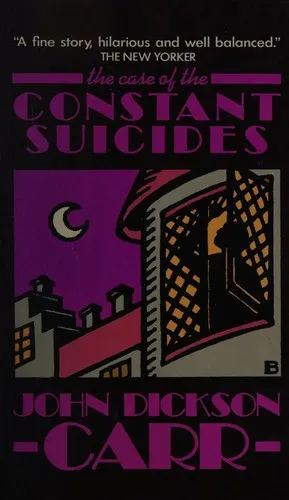
Books like The Case of the Constant Suicides
The Case of the Constant Suicides and Edmund Crispin’s The Moving Toyshop share the rare knack of turning an impossible murder into exhilarating comic chaos. These three novels preserve Carr’s distinctive pleasures: audacious puzzles, macabre atmosphere, and a lively refusal to treat murder-mystery conventions solemnly.
If you liked The Case of the Constant Suicides, you’ll love these
Not lookalikes — kindred books. Each one shares something essential with The Case of the Constant Suicides, and we tell you exactly what.
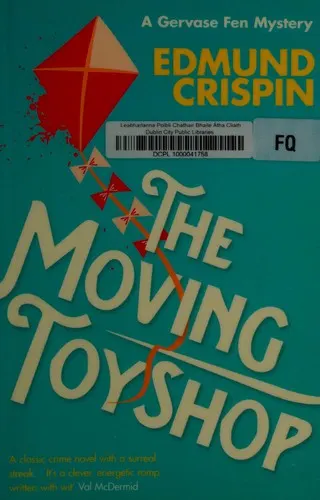
A poet enters an Oxford toyshop, discovers a corpse, and returns to find that the entire shop has vanished. From that splendid opening, Crispin builds a mystery as ingenious as it is gleefully unruly.
Like Carr, he understands that farce can sharpen rather than weaken an impossible crime. Eccentric detective Gervase Fen charges through literary jokes, arguments, chases, and inspired silliness, yet the vanishing shop remains a genuine puzzle with a satisfyingly concrete answer. Long regarded as Crispin’s masterpiece, The Moving Toyshop is the closest thing to recapturing the Campbell clan’s combination of intellectual trickery and comic bedlam.
A demonologist is found murdered inside a room apparently sealed against intrusion, surrounded by the ominous apparatus of his profession. The suspects—magicians, mediums, astrologers, and escape artists—know more than most people about manufacturing miracles.
Rawson was himself a professional magician, and that expertise gives the novel an unusual tactile persuasiveness: doors, windows, sightlines, timings, and misdirection all matter. His magician-detective, the Great Merlini, tackles an extravagant succession of impossibilities without draining them of wonder. A foundational American locked-room mystery, this is essential reading for anyone who admired how Carr makes an outrageous solution feel not merely possible but inevitable.
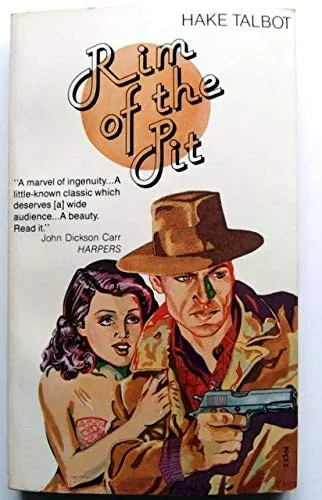
At an isolated lodge surrounded by snow, a séance is arranged to settle a dispute involving a dead man. Almost immediately, the boundary between theatrical fraud and genuine supernatural menace begins to collapse.
Talbot sustains that uncertainty superbly. Instead of presenting one neat locked room, he unleashes a storm of apparently impossible manifestations, giving the reader the intoxicating sense that rational detection may finally have met its match. The atmosphere is darker and more feverish than Carr’s Scottish comedy, but the underlying contest—reason against an expertly staged nightmare—is exactly the same. Rim of the Pit famously placed second only to Carr’s The Hollow Man in Edward D. Hoch’s 1981 expert poll of locked-room mysteries; its audacity fully earns that devotion.