Author
Books like Javier Marías
4 books we recommend to Javier Marías readers, drawn from A Heart So White and The Infatuations — each with the reason why.
If you loved A Heart So White
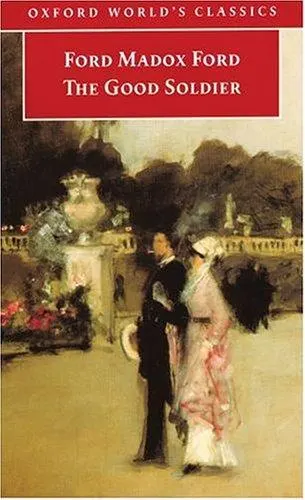
Few novels manipulate disclosure as brilliantly. An American recounts his friendship with two apparently respectable couples, repeatedly correcting himself, circling backward, and discovering that his own innocent phrases contain evidence he failed—or preferred not—to understand.
Its famous opening calls the story “the saddest” the narrator has ever heard, but the book’s real marvel is how uncertainty contaminates every subsequent judgment. Like A Heart So White, it turns marriage into an arrangement of silences and narration into a form of complicity. Ford’s fractured chronology was radically influential, yet the novel remains startlingly intimate: every hesitation feels like a conscience improvising its defense. Anyone captivated by Juan’s uneasy relation to knowledge should encounter this indispensable ancestor.
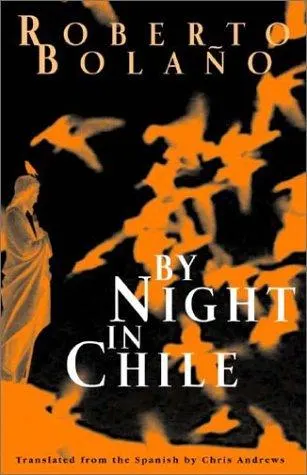
On what may be his final night, a Chilean priest and literary critic answers an accusation that seems at first almost trivial. His feverish monologue moves through poetry, privilege, politics, and self-exoneration with terrifying smoothness.
Bolaño shares Marías’s fascination with cultivated people who believe style and intelligence can keep moral responsibility at a safe distance. The novella’s long, rushing paragraphs generate suspense not from what might happen but from what the speaker cannot quite admit has already happened around him. Widely regarded as one of Bolaño’s finest works, it compresses an entire culture of looking away into barely more than a hundred pages. Its final line is famous for good reason; the accumulating pressure before it is unforgettable.

A celebrated writer hires Emerence, an imperious housekeeper who will care for others with ferocious devotion but permits no one past the locked door of her home. What develops between the two women is part friendship, part struggle for authority, and part confession delivered under the pressure of guilt.
Where Marías examines whether love can survive knowledge, Szabó asks whether love grants a right to know—or whether the desire to penetrate another person’s secrecy may itself become betrayal. Her prose is clearer and more forceful than Marías’s labyrinthine style, but the moral aftershock is remarkably similar: each act of care acquires a second, darker interpretation. Winner of France’s Prix Femina étranger and cherished far beyond Hungary, The Door has the rare gravity of a private remorse transformed into a universal argument about intimacy.
If you loved The Infatuations
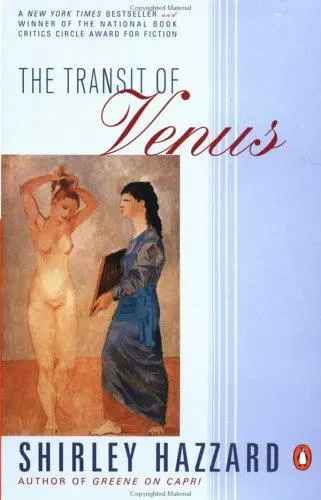
Hazzard follows two Australian sisters into postwar England while giving the reader flashes of foreknowledge from the opening pages. The result is a novel charged with fate: an incidental remark, a missed encounter, or a selfish decision seems to cast a shadow decades ahead.
Where Marías is hypnotically expansive, Hazzard is compressed and diamond-hard. Yet both treat love as interpretation—an attempt to construct a coherent story from another person’s gestures—and both understand that romantic conviction can be ethically ruinous. The Transit of Venus won the National Book Critics Circle Award and has inspired extraordinary devotion ever since. Its sentences invite rereading; its architecture virtually demands it. On a second pass, seemingly casual details reveal just how completely Hazzard had the reader in her hands.