Author
Books like J. I. M. Stewart
6 books we recommend to J. I. M. Stewart readers, drawn from Hamlet, Revenge! and Appleby's End — each with the reason why.
If you loved Hamlet, Revenge!
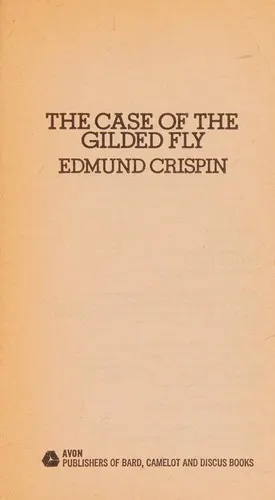
Crispin shares Innes’s exhilarating conviction that a detective story can be learned, absurdly funny and rigorously plotted at once. His detective, Oxford don Gervase Fen, confronts a death among a theatrical company while dispensing literary judgments, behaving outrageously and noticing what everyone else has misread.
The real kinship lies in the prose’s speed and intelligence: allusion is entertainment rather than ornament, and comedy continually diverts attention from exact clue-work. This dazzling 1944 debut inaugurated a series still cherished for making the donnish mystery feel not dusty but anarchic. Anyone who enjoyed Appleby moving through Stewart’s cultivated maze should meet Fen.
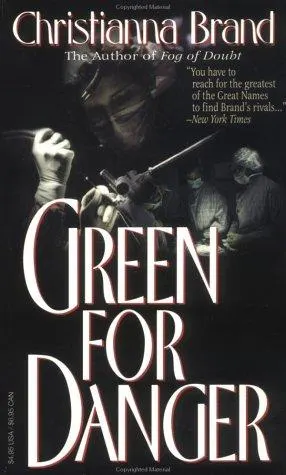
Brand offers the formal pleasure that Hamlet, Revenge! delivers at its best: a crowded cast, a precisely bounded arena and a crucial sequence of actions whose meaning changes as it is reconsidered. Here the arena is a wartime military hospital, where professional routines create something like stage blocking—entrances, positions, gestures and timings all matter.
Yet this is no bloodless mechanism. Brand makes suspicion wound friendships and expose desire, resentment and fear; Inspector Cockrill’s sardonic amusement never erases the human stakes. Regularly acclaimed as one of the masterpieces of Golden Age detection, Green for Danger proves how suspenseful fair-play clueing can become when character and construction are inseparable.
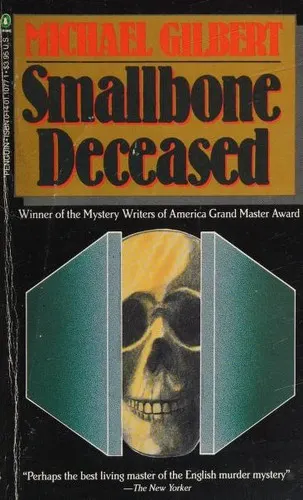
Instead of a country house, Gilbert gives you a venerable London solicitors’ firm: another sealed, hierarchical world whose manners appear stable until murder reveals the rivalries beneath them. His great gift is institutional anatomy. Office customs, professional evasions and the geography of rooms become evidence without ever ceasing to be sharply observed social comedy.
Gilbert’s prose is leaner than Innes’s, but the same civilized ferocity is present—the pleasure of watching an intelligent detective read a community as closely as a document. Widely regarded as a classic of the postwar British puzzle novel, Smallbone Deceased is so cleanly engineered that its solution feels less like a trick than the final click of an intricate lock.
If you loved Appleby's End
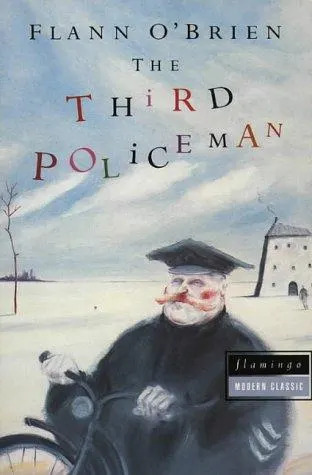
An unnamed narrator enters an Irish police station where bicycles inspire metaphysical theories and perfectly reasoned conversations produce increasingly impossible conclusions. O’Brien turns rural grotesquerie into a complete alternative logic—much as the Raven stories in Appleby’s End seem to impose their own rules upon ordinary life.
It is darker than Stewart, but its solemn absurdity, verbal precision and delight in learned nonsense are wonderfully compatible with his humor. Rejected during O’Brien’s lifetime, it has become a fiercely cherished cult classic: once you encounter its policemen and their theories, forgetting them is nearly impossible.
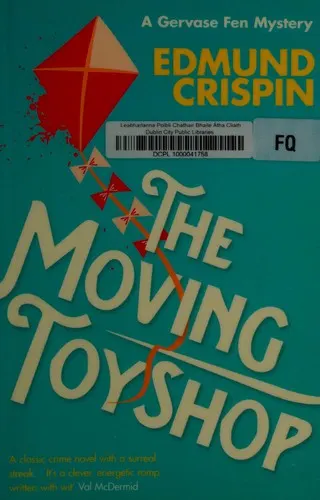
Poet Richard Cadogan discovers a corpse in an Oxford toyshop; when he returns, the shop itself has disappeared. Enter Gervase Fen, an eccentric professor-detective who treats murder, English literature and comic inconvenience as equally stimulating problems.
Crispin supplies a genuine impossible-crime puzzle, but the greater pleasure is his buoyant intelligence: irreverent allusions, sudden farce, extravagant chases and characters who know that detective fiction is itself a game. Often regarded as Crispin’s finest and most beloved novel, The Moving Toyshop is the clearest destination for anyone who wants Appleby’s End’s union of cultivated wit and inspired lunacy intensified rather than merely repeated.
A 999-line poem by John Shade is followed by the commentary of Charles Kinbote, who steadily turns annotation into appropriation. The comedy lies in watching scholarship become obsession: every textual detail is made to support a private story, while the reader must detect what the commentator cannot—or will not—see.
That makes Pale Fire a surprisingly close relative of Appleby’s End. Both revel in erudite misdirection, unreliable interpretation and the disturbing possibility that literature may colonize reality. Nabokov’s masterpiece demands more participation, but rewards it with dazzling jokes, hidden correspondences and inexhaustible ambiguity. Readers have argued over its design for decades; missing it would mean missing one of fiction’s supreme intellectual games.