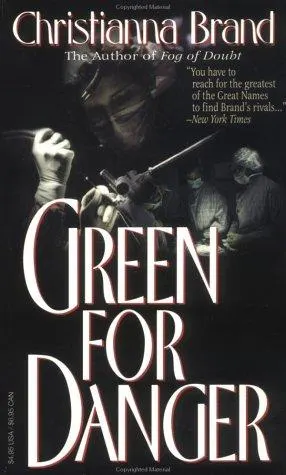
Books like Green for Danger
The happiest Green for Danger reader relishes a mystery in which exact clueing, tart comedy, and genuine human frailty all tighten the same screw. These three preserve that rare balance rather than merely reproducing Brand’s wartime setting.
If you liked Green for Danger, you’ll love these
Not lookalikes — kindred books. Each one shares something essential with Green for Danger, and we tell you exactly what.
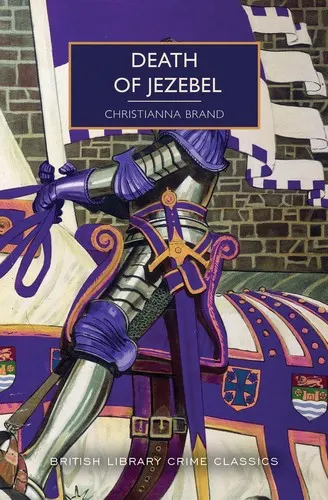
Brand sends Inspector Cockrill into an even more flamboyant puzzle: an old act of cruelty, a theatrical pageant, and a threat that has had years to ripen. Her great gift remains intact—the suspects are funny and exasperating enough to enjoy as company, yet their emotional wounds make the danger real.
Frequently regarded as Brand’s other masterpiece, Death of Jezebel is also a landmark impossible-crime novel. Its audacious construction and dazzling misdirection show that Green for Danger was no lucky triumph; missing it means missing Brand at her most joyfully ingenious.
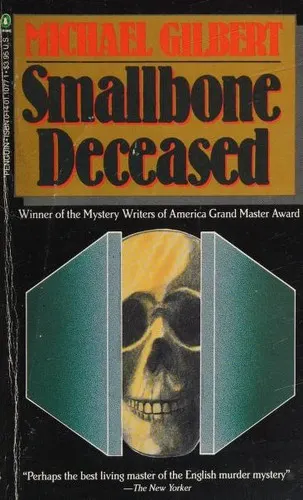
A newcomer to an old London solicitors’ firm finds its dusty routines disrupted by a body in a deed box. Like Brand’s hospital, Gilbert’s office is a functioning community rather than decorative scenery: hierarchy, gossip, professional habits, and tiny breaches of procedure all matter.
Gilbert was himself a solicitor, and his dry authority lets him hide clues in the everyday business of the firm. Regularly singled out as his finest detective novel, Smallbone Deceased offers the same deep satisfaction as Green for Danger: lively suspects, economical wit, and a solution that makes earlier details snap into a newly exact pattern.
Lucy Pym, newly celebrated for a book on psychology, visits a women’s physical-training college and is gradually absorbed into its fiercely disciplined life. Tey makes every student distinct, then lets competition, loyalty, and private judgment alter the meaning of seemingly harmless incidents.
What connects it most strongly to Green for Danger is its tonal control: affectionate institutional comedy darkens almost imperceptibly into moral unease. Often championed by Tey’s devotees as her finest novel, it is less a clockwork puzzle than a devastating study of what observation can—and cannot—tell us about other people.