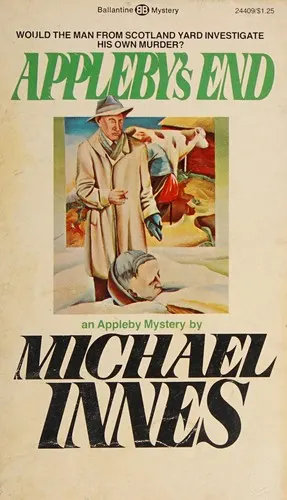
Books like Appleby's End
Flann O’Brien’s The Third Policeman belongs here because Appleby’s End is most memorable when detection gives way to a world governed by literary invention, pedantic logic and cheerful nightmare. These three novels share that rare combination of intellectual play, macabre comedy and reality coming subtly unfastened.
If you liked Appleby's End, you’ll love these
Not lookalikes — kindred books. Each one shares something essential with Appleby's End, and we tell you exactly what.
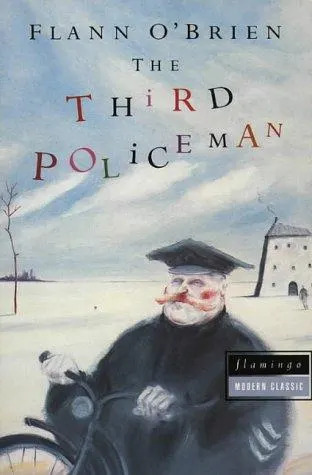
An unnamed narrator enters an Irish police station where bicycles inspire metaphysical theories and perfectly reasoned conversations produce increasingly impossible conclusions. O’Brien turns rural grotesquerie into a complete alternative logic—much as the Raven stories in Appleby’s End seem to impose their own rules upon ordinary life.
It is darker than Stewart, but its solemn absurdity, verbal precision and delight in learned nonsense are wonderfully compatible with his humor. Rejected during O’Brien’s lifetime, it has become a fiercely cherished cult classic: once you encounter its policemen and their theories, forgetting them is nearly impossible.
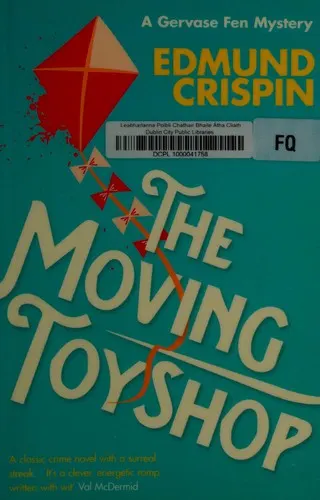
Poet Richard Cadogan discovers a corpse in an Oxford toyshop; when he returns, the shop itself has disappeared. Enter Gervase Fen, an eccentric professor-detective who treats murder, English literature and comic inconvenience as equally stimulating problems.
Crispin supplies a genuine impossible-crime puzzle, but the greater pleasure is his buoyant intelligence: irreverent allusions, sudden farce, extravagant chases and characters who know that detective fiction is itself a game. Often regarded as Crispin’s finest and most beloved novel, The Moving Toyshop is the clearest destination for anyone who wants Appleby’s End’s union of cultivated wit and inspired lunacy intensified rather than merely repeated.
A 999-line poem by John Shade is followed by the commentary of Charles Kinbote, who steadily turns annotation into appropriation. The comedy lies in watching scholarship become obsession: every textual detail is made to support a private story, while the reader must detect what the commentator cannot—or will not—see.
That makes Pale Fire a surprisingly close relative of Appleby’s End. Both revel in erudite misdirection, unreliable interpretation and the disturbing possibility that literature may colonize reality. Nabokov’s masterpiece demands more participation, but rewards it with dazzling jokes, hidden correspondences and inexhaustible ambiguity. Readers have argued over its design for decades; missing it would mean missing one of fiction’s supreme intellectual games.