Author
Books like J. G. Ballard
6 books we recommend to J. G. Ballard readers, drawn from Crash and The Atrocity Exhibition — each with the reason why.
If you loved Crash
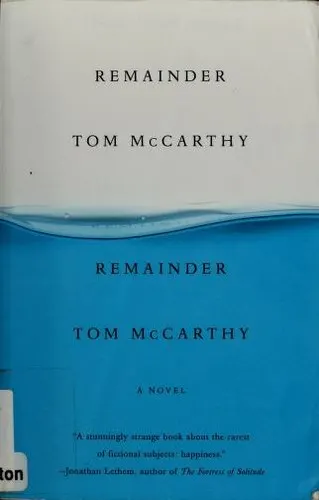
After an accident and a large settlement, an unnamed man begins reconstructing half-remembered places and actions with fanatical precision—hiring performers, acquiring buildings, and rehearsing gestures until they feel “real.” Like Crash, the novel turns repetition into intoxication: matter, bodies, and carefully engineered routines become more compelling than personality or conventional emotion.
McCarthy’s cool, frictionless prose makes escalating compulsion seem perfectly logical. First issued by a tiny art press, Remainder grew into a cult landmark, championed by writers including Zadie Smith. Few novels understand so well that modern desire may be less about possessing something than arranging the machinery that lets an obsession repeat forever.

Erika Kohut teaches piano at the Vienna Conservatory and lives under her mother’s suffocating control, while privately cultivating desires that are punitive, voyeuristic, and fiercely scripted. Jelinek treats sex not as liberation but as an apparatus assembled from discipline, humiliation, commerce, and power.
A reader drawn to Crash’s clinical extremity will recognize Jelinek’s refusal to soften pathology with sympathy. Yet her savagery is social as well as erotic: respectable culture and private compulsion operate by the same cruel rules. This is one of the defining novels by the 2004 Nobel laureate—acidly funny, intellectually ruthless, and impossible to domesticate.

Presented through reviews and discussions on an online escort site, The Sluts begins with clients trading stories about a young man called Brad. Reports contradict one another, fantasies harden into apparent facts, and the forum becomes a machine for manufacturing desire out of language.
Where Crash eroticizes the automobile and the collision report, Cooper eroticizes the interface, the rating, and the anonymous post. Its fragmented structure makes the reader complicit: you keep evaluating testimony even as evaluation itself becomes predatory. Winner of the Prix Sade and long a fiercely admired cult novel, The Sluts is exceptionally disturbing because it shows technology not merely transmitting appetite but designing it.
If you loved The Atrocity Exhibition
Quin’s final novel is the closest thing here to Ballard’s collision of fiction, advertising copy, pornography, psychiatry, and political spectacle. A chase narrative keeps trying to emerge, only to be overwhelmed by slogans, fantasies, diagrams, voices, and sudden changes of register. Like The Atrocity Exhibition, it does not merely describe media saturation: its sentences have been invaded by it.
Quin was a central figure in Britain’s 1960s experimental underground, and Tripticks has become the cult culmination of her brief, fiercely original career. It is funnier and more manic than Ballard, but just as ruthless about consumer desire and the synthetic identities it manufactures. Anyone exhilarated by Ballard’s refusal of ordinary narrative should experience Quin pushing that refusal toward comic delirium.
Motorman opens onto a world with multiple suns, artificial organs, inexplicable bureaucracies, and messages whose authority exceeds their meaning. Ohle presents these impossibilities in flat, unastonished prose, so that the grotesque becomes administrative routine. That deadpan estrangement is profoundly Ballardian: psychological damage, institutional control, and bodily technology fuse into one climate.
First published in 1972 and sustained ever since by devoted readers and small-press rediscovery, Motorman is a genuine American cult novel—compact, funny, sinister, and almost impossible to assimilate. It feels less like conventional dystopia than an artifact recovered from a civilization adjacent to ours. Ballard readers will recognize the peculiar thrill of entering a nightmare that behaves as though nothing is wrong.
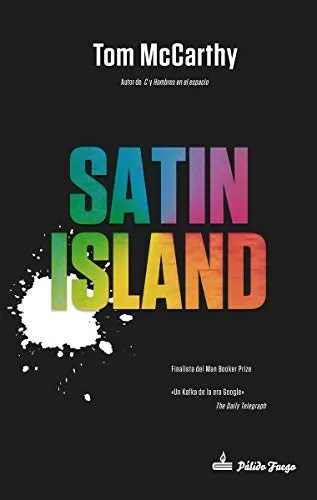
U., a corporate anthropologist, has been commissioned to produce a grand report explaining the contemporary world. Instead, his attention circulates among data, disasters, infrastructure, screens, and scraps of public imagery. The result is a novel about the seductive possibility that apparently unrelated events might form a hidden pattern—and the suspicion that pattern-making itself has become another corporate technology.
Where Ballard uses violent montage, McCarthy uses immaculate, recursive calm. Yet both understand catastrophe as something consumed aesthetically before it is understood morally. Shortlisted for both the Booker Prize and the Goldsmiths Prize, Satin Island is one of the sharpest twenty-first-century descendants of Ballard’s experimental method: a sleek, unsettling book that makes information itself feel pathological.