
Books like The Sluts
A browser tab turns into a crime scene, then a hall of mirrors: every new voice makes the story more vivid and less knowable, until reading, wanting, and watching feel horribly entangled.
If you liked The Sluts, you’ll love these
Not lookalikes — kindred books. Each one shares something essential with The Sluts, and we tell you exactly what.
An unnamed sex worker encounters a client whose violent scenarios blur performance, memory, coercion, and confession. Lewis’s stripped-down first person never supplies the moral distance the reader wants; like Cooper, she makes language itself part of the transaction.
Posthumously published and fiercely cherished as a cult novel, Notice is intimate where The Sluts is cacophonous. One damaged voice replaces the message board, but the same terrible uncertainty remains: are we hearing testimony, fantasy, or a survival strategy invented sentence by sentence? Its emotional nakedness makes it exceptionally hard to shake.
Yeager understands anonymous internet culture not as scenery but as a machine for reorganizing desire. Its isolated young protagonist consumes an endless feed of porn, gore, jokes, threats, and confessions until spectator and participant become nearly indistinguishable.
The fractured posts and deadened offline passages reproduce the moral vertigo of The Sluts: anonymity creates possibilities for candor while destroying any reliable distinction between sincerity and performance. This compact underground novel is among the most convincing accounts of what prolonged exposure to an imageboard can do to consciousness—and it offers no comforting position outside the feed.
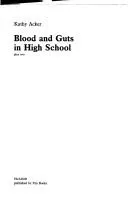
Acker’s punk landmark begins with Janey Smith and proceeds by refusing every respectable way of representing sexual exploitation. Prose gives way to drawings, maps, handwritten pages, stolen forms, and translated poems; the book keeps changing its language before the reader can turn Janey’s suffering into a clean, consumable narrative.
That formal aggression is the crucial kinship with Cooper. Both writers implicate the reader’s appetite, scramble obscenity with vulnerability, and ask whether a story can expose abuse without reproducing its power. Blood and Guts in High School remains influential because its collage is not decoration: it is a young woman tearing apart the available scripts for her body and making a new, dangerous book from the pieces.