Author
Books like Isaac Asimov
5 books we recommend to Isaac Asimov readers, drawn from Foundation and I, Robot — each with the reason why.
If you loved Foundation

Like Foundation, this Hugo-winning classic measures human life against the rise and fall of civilizations. Its monks preserve scraps of scientific knowledge through centuries of darkness, often without understanding what they possess. Miller turns that premise into something mordantly funny, intellectually grave, and finally devastating.
Where Asimov emphasizes reason’s power to shorten barbarism, Miller asks whether knowledge can save humanity from its recurring impulses. Its long historical perspective, institutional continuity, and ruthless dramatic irony make it essential for anyone stirred by Foundation’s vast chronology—but its spiritual and emotional force belongs entirely to itself.
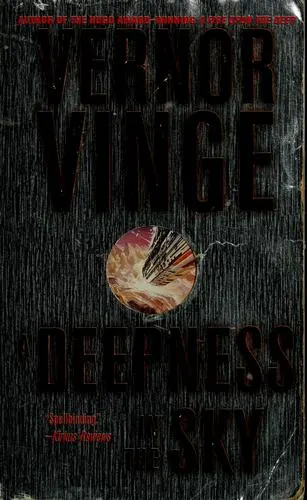
This is space opera for readers who enjoy watching brilliant people think several moves—and several decades—ahead. Two human cultures arrive at a distant star: one built on patient trade, the other on coercive social engineering. Their contest unfolds alongside an alien civilization approaching a technological transformation.
Vinge makes logistics, intelligence analysis, economics, and institutional design genuinely suspenseful. Yet his characters are warmer and more psychologically intricate than Asimov’s archetypal strategists. Winner of the Hugo Award, A Deepness in the Sky offers the rare Foundation-like pleasure of seeing immense historical outcomes turn on the correct interpretation of a system.
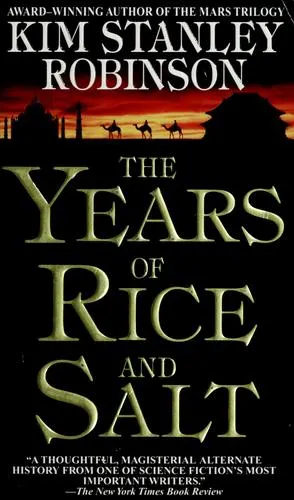
Robinson attempts something few novelists dare: an alternate history spanning centuries, concerned less with rulers than with the cumulative power of philosophy, science, commerce, faith, and political organization. A small group of souls repeatedly encounter one another in new lives, giving intimate continuity to an enormous civilizational canvas.
Its kinship with Foundation lies in its appetite for the largest possible question: what actually changes history? Robinson’s answer is more plural, humane, and contentious than psychohistory, and his societies feel lived in rather than diagrammed. This Locus Award winner is one of modern science fiction’s most ambitious historical visions; skipping it means missing a rare novel that can make centuries feel both vast and personal.
If you loved I, Robot

Klara, an Artificial Friend waiting in a shop to be chosen, studies people with extraordinary attention but cannot always interpret what she sees. Her lucid, slightly estranged perspective exposes the rituals, evasions, and bargains humans accept without noticing.
Readers drawn to Susan Calvin’s encounters with minds that are logical yet never simple will recognize the fascination here. But Nobel laureate Kazuo Ishiguro replaces Asimov’s explanatory resolutions with emotional uncertainty: Klara’s reasoning is clear, while the moral world around her is not. Booker-longlisted and quietly devastating, the novel makes artificial intelligence a lens through which human love appears more mysterious—and more unsettling—than any machine.
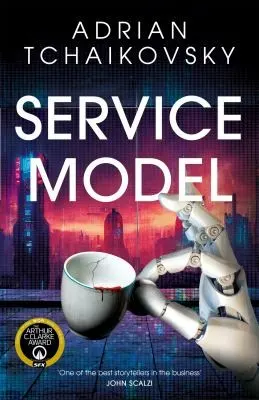
A domestic robot’s orderly existence collapses after its routine goes catastrophically wrong, so it sets out to find new employment. What follows is powered by a wonderfully Asimovian engine: a machine keeps obeying its instructions while institutions, language, and common sense fail around it.
Tchaikovsky turns programmed behavior into deadpan comedy, philosophical inquiry, and mounting unease. Every directive invites a loophole; every bureaucracy behaves more mechanically than the robots caught inside it. From one of contemporary science fiction’s most inventive authors, Service Model recaptures the delight of seeing a seemingly simple rule tested until it reveals an entire civilization’s contradictions.