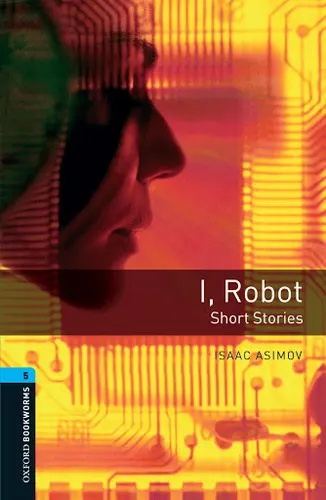
Books like I, Robot
Where The Caves of Steel turns machine reasoning into the keen edge of a detective story, Klara and the Sun makes an artificial mind tender, observant, and hauntingly difficult to fathom. Service Model completes the trio by finding black comedy in the collision between programming and a disorderly world.
If you liked I, Robot, you’ll love these
Not lookalikes — kindred books. Each one shares something essential with I, Robot, and we tell you exactly what.
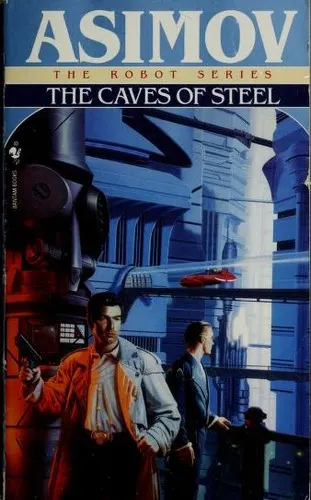
This is the fullest novel-length expression of the pleasure behind I, Robot: watching precise rules generate bewildering human consequences. Earth detective Elijah Baley must investigate a murder alongside R. Daneel Olivaw, a robot whose rigorous reasoning is both indispensable and deeply unwelcome.
Asimov fuses the logical satisfactions of a fair-play mystery with questions about prejudice, trust, and whether flawless deduction produces truth. The Three Laws are not decoration; they function like axioms in an ingenious proof. A foundational robot-detective novel, it shows Asimov converting his famous thought experiments into suspense without sacrificing their intellectual snap.

Klara, an Artificial Friend waiting in a shop to be chosen, studies people with extraordinary attention but cannot always interpret what she sees. Her lucid, slightly estranged perspective exposes the rituals, evasions, and bargains humans accept without noticing.
Readers drawn to Susan Calvin’s encounters with minds that are logical yet never simple will recognize the fascination here. But Nobel laureate Kazuo Ishiguro replaces Asimov’s explanatory resolutions with emotional uncertainty: Klara’s reasoning is clear, while the moral world around her is not. Booker-longlisted and quietly devastating, the novel makes artificial intelligence a lens through which human love appears more mysterious—and more unsettling—than any machine.
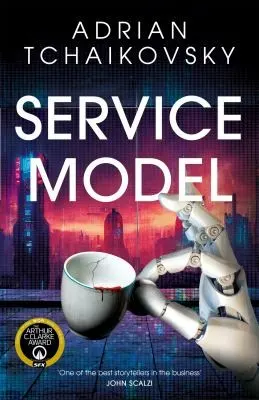
A domestic robot’s orderly existence collapses after its routine goes catastrophically wrong, so it sets out to find new employment. What follows is powered by a wonderfully Asimovian engine: a machine keeps obeying its instructions while institutions, language, and common sense fail around it.
Tchaikovsky turns programmed behavior into deadpan comedy, philosophical inquiry, and mounting unease. Every directive invites a loophole; every bureaucracy behaves more mechanically than the robots caught inside it. From one of contemporary science fiction’s most inventive authors, Service Model recaptures the delight of seeing a seemingly simple rule tested until it reveals an entire civilization’s contradictions.