Author
Books like Herman Melville
6 books we recommend to Herman Melville readers, drawn from Moby-Dick and The Confidence-Man — each with the reason why.
If you loved Moby-Dick
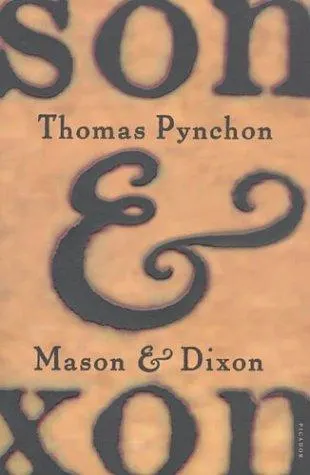
Pynchon matches Melville’s abundance without imitating it. As Charles Mason and Jeremiah Dixon prepare to survey America, their work opens onto astronomy, politics, faith, commerce, and the unnerving question of whether measuring the world also diminishes it.
The delight lies equally in the friendship: melancholy Mason and sociable Dixon make a double act as affectionate and necessary as Ishmael and Queequeg. Around them, history becomes fantastical, jokes acquire metaphysical shadows, and even learned digressions seem alive. Often hailed by Pynchon’s devotees as his masterpiece, Mason & Dixon is one of the few novels whose eccentric language and intellectual appetite can make Melville’s excess feel not unique, but part of a magnificent tradition.
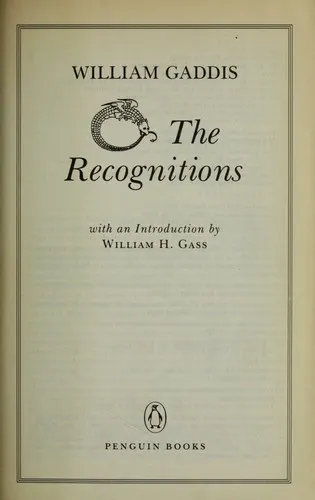
If Ahab’s obsession fascinated you more than the whale, read The Recognitions. Its central figure, Wyatt Gwyon, is a gifted painter drawn into forgery, and Gaddis uses his predicament to ask what originality, belief, and integrity can mean in a culture skilled at counterfeiting all three.
The book is vast, difficult, savagely funny, and crowded with voices—less a tidy narrative than a civilization overheard at the moment its certainties fail. Initially received with bafflement, it has become a landmark of American fiction, inspiring generations of ambitious novelists and fiercely devoted readers. Like Moby-Dick, it demands attention because its apparent chaos is the form of its inquiry: skip it, and you miss one of the boldest descendants of Melville’s metaphysical comedy.

Solenoid begins with an obscure Bucharest schoolteacher recording his disappointments, bodily terrors, dreams, and the peculiarities of the house he has bought. From those unpromising materials, Cărtărescu builds an ecstatic investigation of consciousness—full of insects, classrooms, machines, diagrams, visions, and sudden openings into the sublime.
A Melville reader will recognize the thrilling conversion of knowledge into delirium: catalogues cease to be background and become ways of testing reality. Yet Solenoid offers a distinctly intimate grandeur, making one thwarted life feel as inexhaustible as an ocean. Sean Cotter’s English translation won the 2024 Dublin Literary Award, confirming what its growing body of passionate readers already knew: this is a modern maximalist novel with the strangeness and scale to alter your sense of what fiction can contain.
If you loved The Confidence-Man
JR is the great American novel of talk as a form of counterfeit currency. Its pages are dominated by barely attributed dialogue—sales pitches, telephone calls, evasions, jargon—and Gaddis makes you identify speakers and motives without a trustworthy guide. As in Melville, language meant to establish confidence instead exposes how thoroughly confidence has become a commodity.
The comedy begins with an eleven-year-old discovering that modern finance can be manipulated almost entirely through words and paperwork. From there, the novel’s accumulating voices create a society in which nobody quite controls the system, though nearly everyone is trying to exploit it. Winner of the National Book Award and fiercely cherished by readers willing to meet its formal demands, JR offers the rare experience of learning how to hear a whole civilization lying to itself.
Brás Cubas begins by informing us that he is dead, then treats the freedom of posthumous narration as a license to charm, tease, contradict, and implicate us. His tiny chapters, abrupt digressions, typographical jokes, and confidential addresses to the reader make the book feel less like a conventional story than an intimate performance by a man whose candor may be his cleverest vanity.
Machado’s irony is exquisitely unstable: Brás exposes the selfishness of his class while continually revealing more than he intends about himself. The result is funny, elegant, and morally merciless without ever becoming doctrinaire. Long recognized as a masterpiece of Brazilian literature, it now has devoted readers worldwide—and anyone who relishes Melville’s refusal to separate philosophical inquiry from mischief should regard it as indispensable.

Diderot makes storytelling itself into a confidence game. Jacques and his master travel, argue about freedom and necessity, exchange stories, interrupt one another, and repeatedly find their tale commandeered by a narrator who taunts the reader with alternative possibilities. Every promise of narrative satisfaction becomes an occasion to ask why we trusted the promise in the first place.
Yet the book is not a dry metafictional exercise. It is quick, bawdy, warm, combative, and alive to the shifting power between servant and master, speaker and listener, author and audience. Its radical playfulness helped open possibilities later exploited by Sterne, Melville, and modern experimental fiction. Reading it reveals that the novel has been disputing its own authority—and laughing at our hunger to believe it—since long before postmodernism acquired a name.