Author
Books like Henry James
6 books we recommend to Henry James readers, drawn from The Turn of the Screw, The Golden Bowl and The Ambassadors — each with the reason why.
If you loved The Turn of the Screw
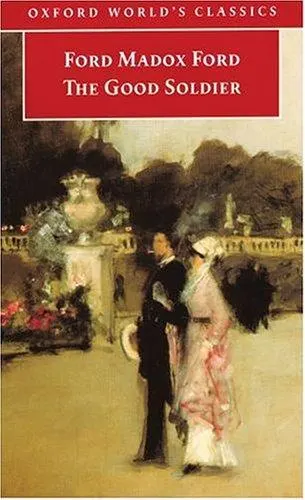
Its famous opening—“This is the saddest story I have ever heard”—introduces John Dowell, a narrator attempting to explain the ruin of two affluent couples. His civilized, digressive account continually forces the reader to reconsider what he knows, what he has misunderstood, and what he may be hiding from himself.
Like James’s governess, Dowell is compelling because sincerity does not guarantee reliability. Ford’s chronology loops and doubles back, transforming social observation into psychological dread. Widely regarded as a modernist masterpiece of unreliable narration, it offers the Jamesian pleasure of discovering that the apparent mystery is inseparable from the mind describing it.
Four strangers arrive at Hill House under the supervision of a paranormal investigator, but Jackson quickly makes Eleanor—the lonely, vulnerable woman through whom we experience the house—the novel’s true territory. Every disturbance may be an external assault, an expression of Eleanor’s desires, or both at once.
Jackson’s sentences move with uncanny precision between comedy, intimacy, and terror. As in The Turn of the Screw, the supernatural cannot be cleanly separated from repression, isolation, and the dangerous longing to belong. Its reputation as one of the finest literary ghost stories is deserved: few novels make architecture, consciousness, and language feel so inseparably haunted.
In postwar England, a country doctor is called to Hundreds Hall, the decaying estate his mother once served. He becomes fascinated by the house and its diminished family just as inexplicable incidents begin to trouble them.
Waters builds dread patiently, through class resentment, wounded pride, and the doctor’s measured first-person testimony. His rationality seems reassuring—until the exact limits of his perception become the novel’s most unsettling question. Shortlisted for the Booker Prize, The Little Stranger has inspired fiercely divided interpretations because Waters never loosens her control or grants an easy verdict. Its final unease lingers precisely because the reader must decide where the haunting resides.
If you loved The Golden Bowl
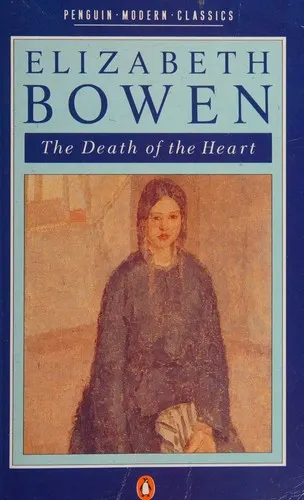
Sixteen-year-old Portia, newly orphaned, enters the immaculate London household of her half-brother and his wife, Anna. She watches the adults closely and records what she sees in a diary; they, in turn, scrutinize her. Bowen turns this simple arrangement into a merciless contest between innocence and sophistication.
A lover of Maggie Verver will recognize Bowen’s interest in the supposedly naïve consciousness that sees more than worldly people expect. Yet Portia’s directness is not merely virtuous: in a society sustained by tact, emotional evasions, and carefully managed appearances, honesty can be catastrophic. Bowen’s sentences are bright, exact, and edged with menace, and rooms and objects seem to absorb the tensions their inhabitants refuse to name. Often considered one of her masterpieces, this is among the finest descendants of James’s late fiction.
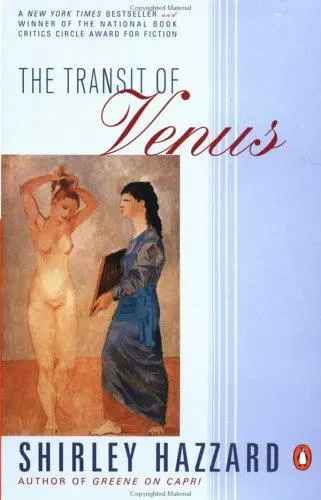
Australian sisters Caroline and Grace Bell arrive in postwar England, where love, ambition, and class will expose them to forms of power they have not yet learned to recognize. Hazzard tells their story with astonishing compression: a glance can contain a verdict, a courteous exchange can become a duel, and an image dropped almost casually may reverberate decades later.
The deepest kinship with The Golden Bowl lies in the novel’s architecture. Hazzard trusts the reader to notice hidden correspondences and to understand that who knows what—and when—can determine an entire life. Her prose has James’s density without imitating his syntax: aphoristic, sensuous, and lethal. Winner of the National Book Critics Circle Award and cherished as Hazzard’s masterpiece, The Transit of Venus is the rare novel whose design becomes more impressive the longer one lives with it.
If you loved The Ambassadors
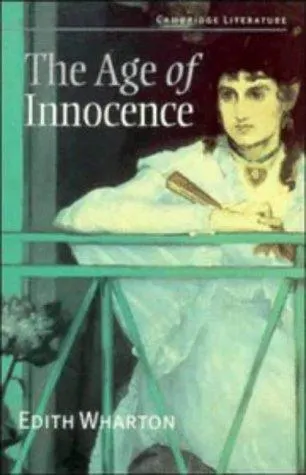
Wharton gives social convention the weight James gives consciousness. Newland Archer believes himself more perceptive and liberal than the old New York society around him; the arrival of Countess Ellen Olenska tests not merely his desires but his flattering idea of who he is.
A lover of Strether will recognize the exquisite tension between liberation and responsibility, and the way a whole life can turn on what is understood too late. Wharton’s irony is swifter and colder than James’s, yet never cheapens her characters. The first novel by a woman to win the Pulitzer Prize, it remains devastating because its renunciations cannot be sorted neatly into courage and cowardice.