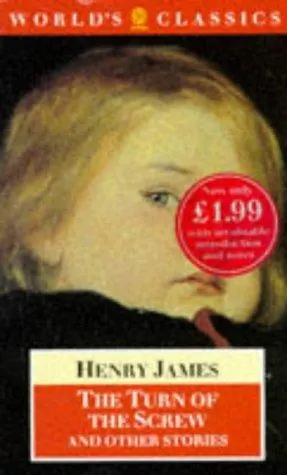
Books like The Turn of the Screw
Ford Madox Ford’s The Good Soldier contains no conventional haunting, yet it belongs here because Henry James’s deepest horror is interpretive: a poised voice tells a story whose meaning keeps shifting beneath it. These three novels all turn reading itself into suspense, making every certainty feel provisional.
If you liked The Turn of the Screw, you’ll love these
Not lookalikes — kindred books. Each one shares something essential with The Turn of the Screw, and we tell you exactly what.
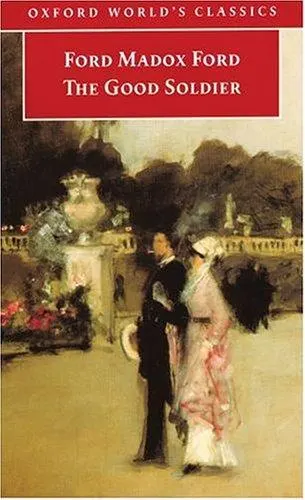
Its famous opening—“This is the saddest story I have ever heard”—introduces John Dowell, a narrator attempting to explain the ruin of two affluent couples. His civilized, digressive account continually forces the reader to reconsider what he knows, what he has misunderstood, and what he may be hiding from himself.
Like James’s governess, Dowell is compelling because sincerity does not guarantee reliability. Ford’s chronology loops and doubles back, transforming social observation into psychological dread. Widely regarded as a modernist masterpiece of unreliable narration, it offers the Jamesian pleasure of discovering that the apparent mystery is inseparable from the mind describing it.
Four strangers arrive at Hill House under the supervision of a paranormal investigator, but Jackson quickly makes Eleanor—the lonely, vulnerable woman through whom we experience the house—the novel’s true territory. Every disturbance may be an external assault, an expression of Eleanor’s desires, or both at once.
Jackson’s sentences move with uncanny precision between comedy, intimacy, and terror. As in The Turn of the Screw, the supernatural cannot be cleanly separated from repression, isolation, and the dangerous longing to belong. Its reputation as one of the finest literary ghost stories is deserved: few novels make architecture, consciousness, and language feel so inseparably haunted.
In postwar England, a country doctor is called to Hundreds Hall, the decaying estate his mother once served. He becomes fascinated by the house and its diminished family just as inexplicable incidents begin to trouble them.
Waters builds dread patiently, through class resentment, wounded pride, and the doctor’s measured first-person testimony. His rationality seems reassuring—until the exact limits of his perception become the novel’s most unsettling question. Shortlisted for the Booker Prize, The Little Stranger has inspired fiercely divided interpretations because Waters never loosens her control or grants an easy verdict. Its final unease lingers precisely because the reader must decide where the haunting resides.