Author
Books like Helen Oyeyemi
6 books we recommend to Helen Oyeyemi readers, drawn from White Is for Witching and Mr. Fox — each with the reason why.
If you loved White Is for Witching

A student moves into a strange converted warehouse and becomes fascinated by her roommate, but the real seduction is the building itself: leaking, fermenting, blurring the boundaries between bodies and rooms. Hval’s sensuous prose makes food, decay, desire, and architecture feel disturbingly interchangeable.
Like Oyeyemi, Hval understands that a house need not be merely haunted; it can alter the people inside it and expose desires they cannot articulate. This slender novel—written by an acclaimed experimental musician with an exceptional ear for texture—offers the queer intimacy, bodily estrangement, and dream logic of White Is for Witching in an even more concentrated form.

After a disturbing dream, Yeong-hye stops eating meat. Her decision is narrated largely by others, who treat her body as property, puzzle, and battleground. That structure will feel powerfully familiar to readers fascinated by how Miranda is watched, interpreted, and spoken around while remaining irreducibly strange.
Han’s language is lucid, but what it reveals is increasingly surreal: appetite becomes refusal, refusal becomes rebellion, and the body reaches toward an existence outside the categories imposed upon it. Winner of the International Booker Prize, The Vegetarian helped establish Han as one of contemporary fiction’s essential writers long before her Nobel Prize. Its eerie compression makes it difficult to shake.
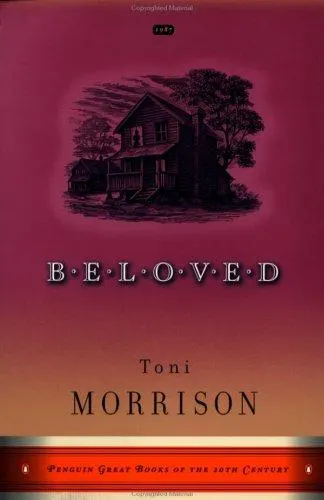
“124 was spiteful”: from its first sentence, Morrison’s novel grants a house temperament, memory, and agency. Sethe and her daughter live amid a haunting inseparable from slavery’s violence, until a mysterious young woman’s arrival changes the household’s fragile equilibrium.
The deepest kinship with White Is for Witching lies in the way both novels turn Gothic disturbance into historical truth. Their ghosts are not decorative scares; they embody what families and nations try to exclude, repress, or forget. Morrison’s shifting voices, charged repetitions, and fierce attention to motherhood also illuminate Oyeyemi’s methods without diminishing her originality. Beloved won the Pulitzer Prize and reshaped the possibilities of the American novel; its reputation is immense because the reading experience itself remains so intimate, frightening, and alive.
If you loved Mr. Fox
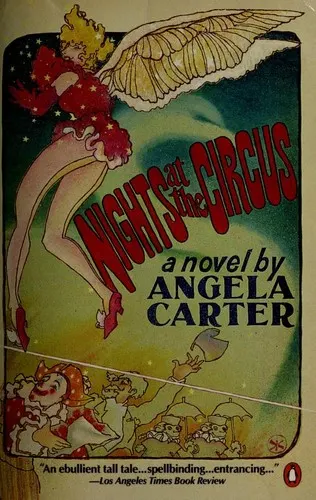
Sophie Fevvers, a celebrated aerialist who may or may not possess real wings, recounts her life to a skeptical journalist determined to expose her. Their interview becomes a duel between his appetite for facts and her exuberant command of fiction.
Like Oyeyemi, Carter raids fairy tales without treating them as sacred objects. Her lush, bawdy sentences expose the violence hidden inside romantic myths, while Fevvers—loud, theatrical, impossible to contain—seizes the role of storyteller from the man trying to define her. A landmark of feminist fabulism and winner of the James Tait Black Memorial Prize, this is the natural next book for anyone intoxicated by Mr. Fox’s wit, danger, and narrative mutiny.
Poor Things presents itself as a recovered Victorian memoir, complete with editorial apparatus and Gray’s grotesquely beautiful illustrations. At its center is Bella Baxter, whose existence is explained by men with great confidence—until her own account disrupts theirs.
That struggle over authorship is pure Mr. Fox territory. Gray makes every document suspect and every ornate male explanation reveal the desires behind it. Yet the book is also riotously funny: a parody of Gothic fiction, respectable history, sexual hypocrisy, and the fantasy that a woman can be neatly written into someone else’s story. Winner of both the Whitbread Novel Award and the Guardian Fiction Prize, it is a formally audacious original whose tricks sharpen, rather than obscure, its emotional and political force.
Ninety-two-year-old Marian Leatherby receives a hearing trumpet and promptly discovers that her family intends to send her to an institution. From that plain betrayal, Carrington proceeds according to a dream logic at once deadpan, mystical, and gloriously unruly.
Where Mr. Fox undermines murderous masculine myths through competing tales, The Hearing Trumpet dismantles the conventions that render old women passive, invisible, or ridiculous. Marian’s calm practicality makes the novel’s escalating strangeness even funnier, and Carrington never explains away an image that can remain potent and mysterious. Long cherished as a cult classic of feminist surrealism, it offers the rare pleasure of entering an imagination with no interest in behaving sensibly—and realizing that its madness has exposed the ordinary world’s absurdities.