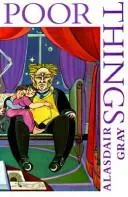
Books like Poor Things
Poor Things and Angela Carter’s Nights at the Circus are exuberant twins: bawdy, intellectually unruly inventions in which a woman’s impossible life exposes the fantasies men mistake for truth.
If you liked Poor Things, you’ll love these
Not lookalikes — kindred books. Each one shares something essential with Poor Things, and we tell you exactly what.
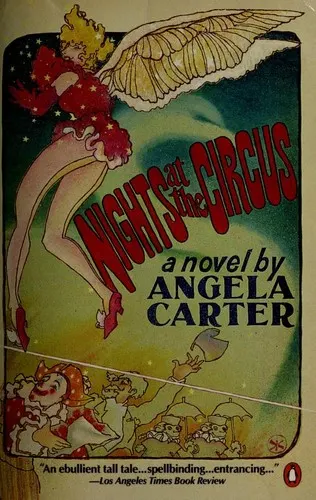
Sophie Fevvers—music-hall celebrity, circus aerialist, and possibly winged woman—recounts her history to an American journalist determined to uncover the fraud. As in Poor Things, storytelling becomes a struggle over who gets to define an extraordinary woman: the skeptical man arranging facts into a respectable narrative, or the heroine joyfully inventing herself beyond his categories.
Carter matches Gray’s appetite for grotesque comedy, sexual candor, political argument, and luxuriant period pastiche. Her prose is sensuous and excessive by design, turning feminist ideas into spectacle rather than sermon. Winner of the James Tait Black Memorial Prize and widely regarded as Carter’s masterpiece, this is the closest thing to Poor Things’ ideal companion—equally clever, but too alive to be merely clever.
Gray’s fake documents, argumentative footnotes, typographical jokes, and narrators who cannot control their own book all belong to a tradition Sterne detonated in the eighteenth century. Tristram attempts to tell his life story, only to discover that digressions, family anecdotes, theories, and the physical page itself keep defeating chronology.
The result is not a dusty ancestor of experimental fiction but one of literature’s great comic performances: intimate, mischievous, indecent, and perpetually surprised by its own form. Its black page, marbled page, missing chapter, and wayward punctuation influenced generations of novelists, yet remain funnier and stranger than most later imitations. Anyone who loved Gray’s delight in showing how a novel is manufactured should meet the writer who made that manufacture into an inexhaustible joke.
Ninety-two-year-old Marian Leatherby receives a hearing trumpet and promptly learns that her family intends to place her in an institution. From that wonderfully dry beginning, Carrington unleashes an anarchic vision of old age, female friendship, occult conspiracy, institutional cruelty, and reality coming loose at the hinges.
What it shares with Poor Things is a liberating refusal of good behavior. Both novels place a supposedly dependent woman inside systems built to explain and manage her, then let her prove far stranger, funnier, and freer than those systems can tolerate. Carrington—one of surrealism’s major painters—writes with a dream’s serene conviction and a satirist’s sharpness. Long cherished as a cult classic, The Hearing Trumpet offers the rare thrill of a book that seems to obey no inherited rules at all.