Author
Books like Hanif Kureishi
3 books we recommend to Hanif Kureishi readers, drawn from The Buddha of Suburbia — each with the reason why.
If you loved The Buddha of Suburbia

If Kureishi’s bustling, mongrel London delighted you, Smith’s debut is its most exuberant heir. It begins with the unlikely friendship of Archie Jones and Samad Iqbal, then expands into a brilliantly orchestrated comedy of families trying—and failing—to control what their children become.
Smith shares Kureishi’s gift for making race, class, sex, faith, and generational conflict feel inseparable from jokes, appetites, and everyday embarrassment. Her characters are never demographic illustrations: they are vain, ardent, ridiculous, and fiercely alive. Winner of the Whitbread First Novel Award and immediately hailed as a landmark of modern British fiction, White Teeth has the rare amplitude to make an entire city feel like a family argument you cannot bear to leave.
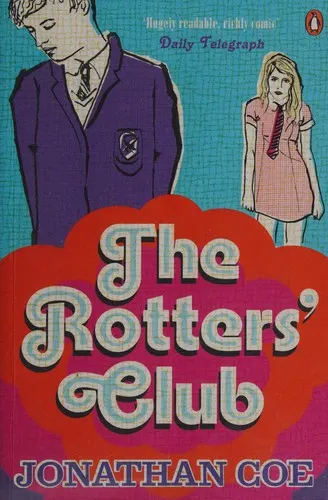
Coe captures something easy to miss when praising The Buddha of Suburbia: its precise fusion of adolescent yearning with state-of-the-nation comedy. His schoolboys in 1970s Birmingham obsess over music, sex, friendship, and their imagined futures while strikes, industrial conflict, racism, and political extremism press in from the adult world.
The novel is affectionate without becoming nostalgic and political without sacrificing comic timing. Coe’s ensemble method differs from Kureishi’s charismatic first-person performance, but it produces a comparable pleasure: private humiliations and national history continually collide. Widely regarded as one of Coe’s finest novels, The Rotters’ Club turns teenage confusion into a generous, funny portrait of Britain remaking itself.
Read this for the deepest source of Karim’s appeal: the young man who refuses to let other people decide what sort of person he is. Augie, growing up in Depression-era Chicago, is surrounded by would-be mentors, schemers, lovers, and employers, each eager to recruit him into a ready-made life. His resistance becomes a joyous, unruly education.
Bellow’s sentences have the same appetite Karim brings to London—alert to pretension, seduction, opportunity, and absurdity. The novel is looser and more picaresque than Kureishi’s, but that looseness is its freedom: identity emerges through improvisation rather than solemn self-discovery. A National Book Award winner whose opening declaration became one of American fiction’s touchstones, Augie March is indispensable if what you loved most was the spectacle of a voice inventing itself in public.