Author
Books like Dorothy L. Sayers
5 books we recommend to Dorothy L. Sayers readers, drawn from Gaudy Night and Murder Must Advertise — each with the reason why.
If you loved Gaudy Night
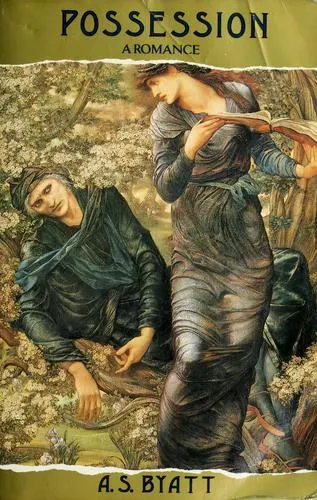
A young scholar finds an unexpected draft letter hidden in an old book and joins forces with the formidable Maud Bailey to trace a secret connection between two Victorian poets. Research becomes suspense: archives, marginalia, competing interpretations, and professional rivalries all matter because ideas matter.
Like Gaudy Night, Byatt’s Booker Prize–winning novel asks whether scholarship can coexist with private happiness—and whether love between intellectual equals can escape possessiveness. Its poems, letters, diaries, and exhilarating discoveries make reading itself feel adventurous. Few novels offer such convincing proof that the life of the mind can be intensely romantic.
Invited to lecture at a women’s physical-training college, Lucy Pym becomes fascinated by its gifted, exhausted students and the demanding institution shaping them. Tey makes the college vivid as both refuge and pressure chamber: friendships, ambitions, favoritism, and small acts of dishonesty gather moral weight.
The deepest kinship with Gaudy Night lies in its refusal to make detection ethically simple. Lucy must decide what truth requires when truth may injure people and an institution she admires. Tey’s psychological acuity has kept this compact, unsettling novel beloved among discerning crime readers; its final moral problem is the kind one continues arguing with long after the puzzle is over.
For readers who want more of Sayers’s civilized mischief, Sarah Caudwell is irresistible. Professor Hilary Tamar and a circle of young London barristers attempt to understand what has befallen their colleague Julia Larwood during an art-lovers’ holiday in Venice, chiefly by scrutinizing her gloriously indiscreet letters.
The pleasure is in the minds at play: elegant deductions, pedantic squabbles, affectionate mockery, legal ingenuity, and jokes whose precision is part of the mystery. Caudwell wrote only four Hilary Tamar novels, which helps explain their devoted cult following; each is a rare combination of fair-play puzzle and sophisticated comedy. Missing this one means missing one of detective fiction’s funniest and most distinctive voices.
If you loved Murder Must Advertise
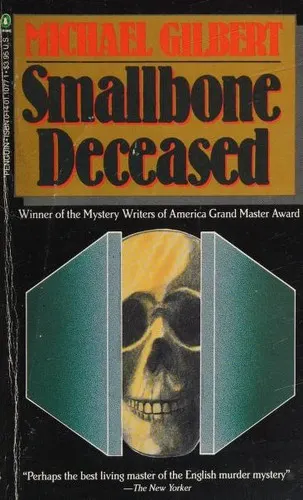
A body is discovered in a deed box at an impeccably respectable London solicitors’ firm, where hierarchy, habit and professional discretion govern every conversation. Gilbert, himself a solicitor, makes office procedure as absorbing—and as quietly absurd—as Sayers makes advertising copy.
The deeper kinship lies in the precision: character emerges through work, status and verbal manner, while dry comedy coexists with a beautifully constructed puzzle. Long cherished by connoisseurs of classic detection, Smallbone Deceased is the rare office mystery whose setting feels not decorative but indispensable.
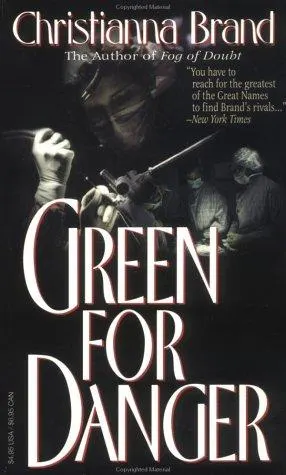
At a wartime military hospital, an apparently routine operation ends in death; Inspector Cockrill arrives among a tightly entangled group of doctors and nurses. Brand gives them sparkling banter, romantic friction and sharply distinct personalities before tightening the atmosphere with extraordinary control.
Like Sayers, she can pivot from social comedy to genuine menace without breaking the novel’s tone. The clueing is audaciously fair, the suspect group remains vividly human, and Cockrill’s sardonic intelligence is a pleasure in itself. Its reputation as one of the Golden Age’s finest puzzles is thoroughly earned.