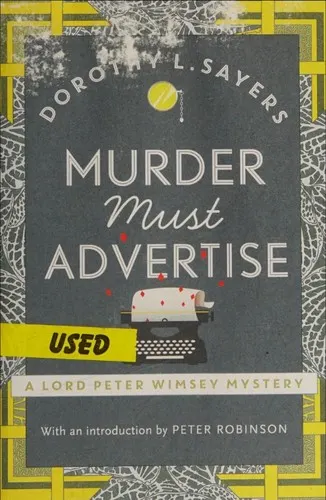
Books like Murder Must Advertise
Double lives. Murder Must Advertise delights because everyone is performing: employees sell fantasies, Lord Peter changes identities, and comedy conceals moral danger. These novels likewise combine ingenious detection with sharp observation of people inside institutions.
If you liked Murder Must Advertise, you’ll love these
Not lookalikes — kindred books. Each one shares something essential with Murder Must Advertise, and we tell you exactly what.
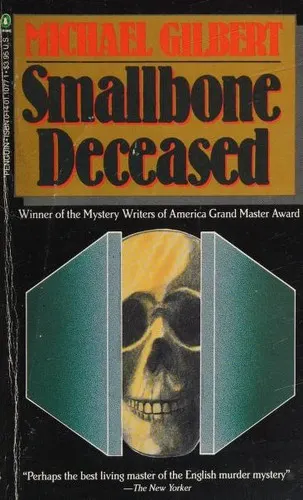
A body is discovered in a deed box at an impeccably respectable London solicitors’ firm, where hierarchy, habit and professional discretion govern every conversation. Gilbert, himself a solicitor, makes office procedure as absorbing—and as quietly absurd—as Sayers makes advertising copy.
The deeper kinship lies in the precision: character emerges through work, status and verbal manner, while dry comedy coexists with a beautifully constructed puzzle. Long cherished by connoisseurs of classic detection, Smallbone Deceased is the rare office mystery whose setting feels not decorative but indispensable.
Lucy Pym, newly famous for a popular psychology book, visits a women’s physical-training college and becomes fascinated by its fiercely disciplined students. Tey builds the school into a complete society of loyalties, rivalries, ambitions and watchful judgments.
A reader who values the moral intelligence beneath Sayers’s wit should find this irresistible. Detection gradually becomes a question of conscience: what does an observer owe the people she has learned to understand? Tey’s supple characterisation and refusal of easy righteousness have made this one of her most devotedly admired novels.
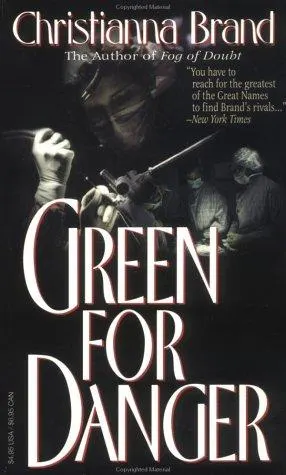
At a wartime military hospital, an apparently routine operation ends in death; Inspector Cockrill arrives among a tightly entangled group of doctors and nurses. Brand gives them sparkling banter, romantic friction and sharply distinct personalities before tightening the atmosphere with extraordinary control.
Like Sayers, she can pivot from social comedy to genuine menace without breaking the novel’s tone. The clueing is audaciously fair, the suspect group remains vividly human, and Cockrill’s sardonic intelligence is a pleasure in itself. Its reputation as one of the Golden Age’s finest puzzles is thoroughly earned.