Author
Books like Dino Buzzati
6 books we recommend to Dino Buzzati readers, drawn from The Tartar Steppe and The Bears' Famous Invasion of Sicily — each with the reason why.
If you loved The Tartar Steppe
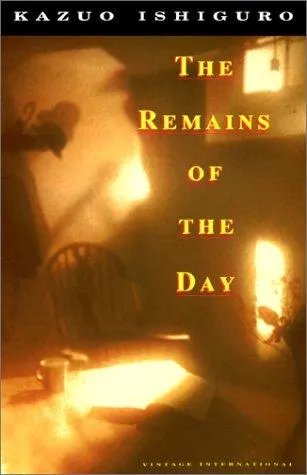
Stevens has devoted himself to perfect service, turning discipline into both vocation and refuge. As he drives through England, his stately recollections reveal how expertly a person can mistake self-denial for purpose.
Like Buzzati, Ishiguro makes lost time almost physically palpable. Both novels understand that tragedy need not arrive as catastrophe: it can accumulate through obedience, habit, and the repeated postponement of desire. Ishiguro’s restrained first-person voice also creates a comparable tension between what the protagonist believes and what the reader cannot help seeing. Winner of the Booker Prize, this is one of the great novels about discovering—perhaps too late—what duty has cost.
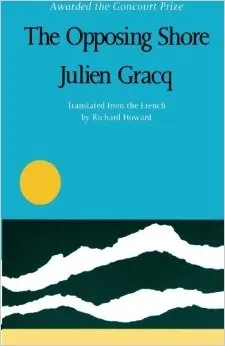
Aldo is posted to a decaying naval outpost facing Farghestan, an enemy so long inactive that vigilance has become ritual. Yet the empty horizon exerts a mounting pressure: everyone appears to be waiting for history, while half fearing and half desiring its return.
The obvious kinship with The Tartar Steppe is intensified by Gracq’s hypnotic prose. Landscape becomes suspense; silence becomes provocation; boredom ripens into a dangerous appetite for significance. Gracq famously refused the Prix Goncourt awarded to the novel in 1951, an act consistent with the austere independence that made him a revered figure in French literature. Few books capture so powerfully the temptation to summon the very event one has spent years guarding against.
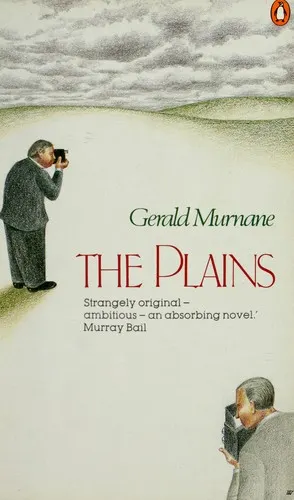
An unnamed filmmaker travels into an elusive Australian interior hoping to persuade wealthy landowners to support a film about their country. What follows is less an expedition than an entry into a world of private symbols, rival theories, distant rooms, and endless contemplation.
Murnane shares Buzzati’s gift for turning waiting into an entire metaphysics. His plains, like Buzzati’s desert, are simultaneously geography and the unreachable territory on which a person projects ambition, identity, and hope. The book is brief but uncannily spacious, with the lucid logic of a dream one cannot dismiss after waking. This singular novel became central to Murnane’s international reputation and devoted readership; miss it, and you miss one of fiction’s strangest and purest demonstrations that an anticipated revelation can shape a life more completely than any revelation itself.
If you loved The Bears' Famous Invasion of Sicily
A clockwork father-and-son toy, joined at the hands, longs to become self-winding and find a home. From that delicate premise Hoban makes an adventure at once funny, perilous, and philosophically rich.
Like Buzzati, he never patronizes young readers or reassures adults too cheaply. Lillian Hoban’s illustrations sharpen the book’s peculiar tenderness, while the toy characters’ vulnerability gives every escape and kindness real weight. Since its 1967 publication, it has become a fiercely cherished children’s classic—the kind readers press on friends because its final emotional power is almost impossible to convey without saying: read it.
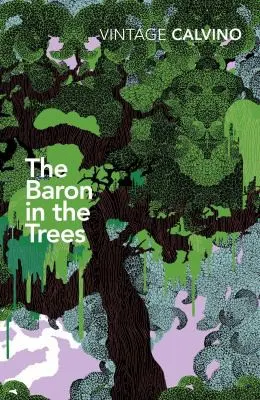
After quarreling with his family, twelve-year-old Cosimo climbs into the trees and declares that he will never come down. Calvino treats this impossible decision with perfect seriousness, building from it a buoyant life of independence, argument, love, and intellectual adventure.
The kinship with Buzzati lies in the effortless turn from fairy-tale absurdity to something piercingly human. Both writers understand that freedom can be glorious, ridiculous, and lonely, and both tell their stories with a deceptively light touch. One of Calvino’s most beloved novels, this is a radiant demonstration of why he became a defining fabulist of the twentieth century.
When a boy unexpectedly inherits a throne, he discovers that wanting to rule justly is far simpler than dealing with ministers, newspapers, budgets, rival nations, and the conflicting demands of his subjects. Korczak turns government into an enormous, darkly comic children’s predicament.
Readers who loved Buzzati’s bears trying to exchange wilderness for civilization will recognize the same fascination with good intentions under pressure. Korczak—an influential educator who devoted his life to children—grants Matt’s ideals complete dignity while remaining unsparing about vanity, bureaucracy, and power. Long regarded as a Polish children’s classic, the novel has the rare moral seriousness of a book that knows innocence deserves honesty, not protection from the truth.