Author
Books like Daniel Defoe
3 books we recommend to Daniel Defoe readers, drawn from Robinson Crusoe — each with the reason why.
If you loved Robinson Crusoe
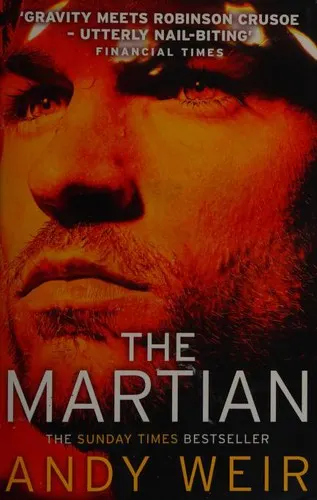
Few novels reproduce so exactly the pleasure of watching intelligence turn scarcity into possibility. Stranded on Mars, Mark Watney inventories supplies, calculates risks, improvises tools, and records his progress—much as Crusoe converts isolation into a succession of practical problems. Weir makes arithmetic, botany, and engineering genuinely suspenseful, while Watney’s irreverent voice gives the survival ledger comic momentum. Originally self-published, the novel became a publishing phenomenon because its readers found competence itself thrilling. If Crusoe’s methodical acts of making and measuring delighted you, The Martian is their most exuberant modern descendant.
Haushofer begins with an inexplicable barrier that leaves a woman alone in an Alpine landscape, then concentrates not on solving the mystery but on the daily labor of continuing to live. Planting potatoes, cutting hay, preserving food, watching weather, and caring for animals acquire tremendous moral weight.
This is Robinson Crusoe stripped of triumphal mastery. Its solitary narrator keeps a record, but her work gradually teaches her interdependence rather than dominion: survival depends upon attention, restraint, and devotion to other creatures. Long cherished in Europe and increasingly recognized as a classic of feminist and ecological fiction, The Wall has an austere emotional force that accumulates almost invisibly. Its cow, dog, and cats become as unforgettable as many human characters in fiction.
Foe returns deliberately to Crusoe’s island but enters through a person Defoe left out: Susan Barton, a castaway who encounters Cruso and Friday and later tries to persuade the writer Daniel Foe to tell her story. The result is not parody but a taut, haunting inquiry into who earns the right to narrate—and what happens to people whose voices do not fit the story an author wants.
Coetzee, later awarded the Nobel Prize, understands Defoe’s plain, authoritative prose from the inside. He uses its apparent solidity to make every omission reverberate, especially Friday’s silence. Reading Foe after Robinson Crusoe is like discovering a hidden chamber inside a familiar house: the original novel becomes stranger, richer, and harder to regard innocently. It is one of the rare literary responses that feels both indispensable in conversation with its source and fully alive on its own.