Author
Books like Dan Simmons
3 books we recommend to Dan Simmons readers, drawn from Hyperion — each with the reason why.
If you loved Hyperion
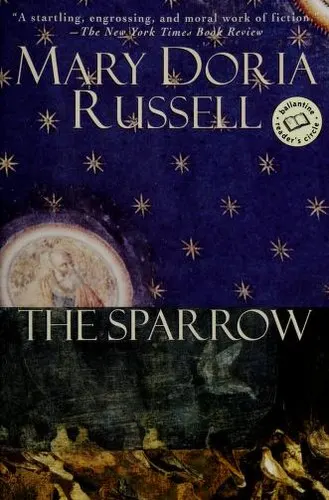
Like Hyperion, The Sparrow turns an interstellar expedition into an ordeal of faith, guilt, and interpretation. It opens with a Jesuit linguist returning alone and terribly damaged from humanity’s first-contact mission; the novel then moves between the inquiry into his fate and the hopeful beginnings of the voyage.
Russell makes theology dramatically urgent rather than ornamental. Every discovery can be read as providence, coincidence, or catastrophic misunderstanding, and the crew becomes as intimate and vulnerable as Simmons’s pilgrims. Winner of the Arthur C. Clarke Award, The Sparrow has inspired unusually fierce reader devotion because its questions do not end when the plot does. If Sol Weintraub’s story was the part of Hyperion that broke you, this is essential.
For the reader who loved assembling Hyperion from partial, contradictory testimonies, Gene Wolfe offers a more compact—and even more treacherous—masterwork. Three linked narratives circle two colonized worlds, where identity, memory, and the distinction between native and settler are disturbingly unstable.
Wolfe never flags the clues or settles every ambiguity. A casual sentence may quietly revise an entire narrative, making rereading feel less like repetition than investigation. The book’s reputation among serious science-fiction readers rests on that extraordinary precision: it trusts you to discover the novel hidden inside the stories. Miss it, and you miss one of speculative fiction’s finest demonstrations of how form itself can become a mystery.
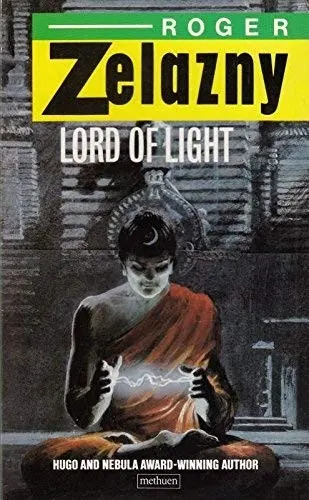
Lord of Light shares Hyperion’s exhilarating ability to make advanced technology feel like sacred myth without dissolving the machinery into mere magic. On a distant colony, powerful figures have assumed the names and attributes of Hindu gods; against them stands Sam, a witty, elusive rebel who understands that controlling belief can matter more than controlling weapons.
Zelazny’s Hugo-winning novel moves with a rare combination of grandeur and speed. Its prose can sound scriptural in one paragraph and slyly irreverent in the next, while its battles carry genuine arguments about mortality, hierarchy, and liberation. Readers drawn to Simmons’s fusion of poetry, religion, spectacle, and audacious far-future invention will find here one of the genre’s foundational triumphs—and one that still feels gloriously unlike anything else.