Author
Books like Chinua Achebe
5 books we recommend to Chinua Achebe readers, drawn from Things Fall Apart and Arrow of God — each with the reason why.
If you loved Things Fall Apart
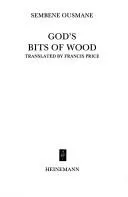
Sembène’s classic begins with railway workers in colonial West Africa undertaking a strike, then expands into a great communal novel. Its power lies not merely in resistance to empire but in the way collective action changes ordinary people: families argue over hunger and dignity, old hierarchies lose their authority, and women emerge as some of the movement’s boldest strategists.
Where Things Fall Apart concentrates historical catastrophe through Okonkwo, Sembène distributes history across an unforgettable chorus. The result is earthy, angry, funny, and intensely humane—a foundational African novel whose crowded vitality makes political change feel intimate and lived rather than abstract.
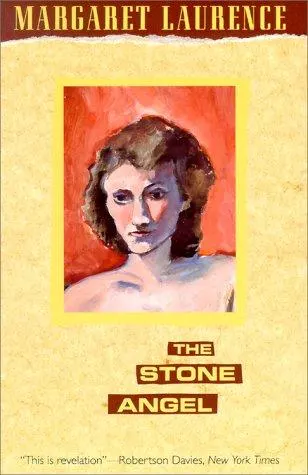
Hagar Shipley, the indomitable elderly narrator of The Stone Angel, shares Okonkwo’s fatal inability to separate strength from hardness. Looking back over her life on the Canadian prairie, she reveals how pride can preserve a person against humiliation while also starving every relationship that matters.
Laurence’s setting and voice are far removed from Achebe’s, which makes the kinship especially revealing: both novels refuse to excuse their protagonists, yet grant them such stature that judgment becomes inseparable from grief. A landmark of Canadian literature, The Stone Angel turns one difficult human being into a tragedy of biblical force. Readers haunted by Okonkwo tend to recognize Hagar immediately—and do not forget her.
If you loved Arrow of God
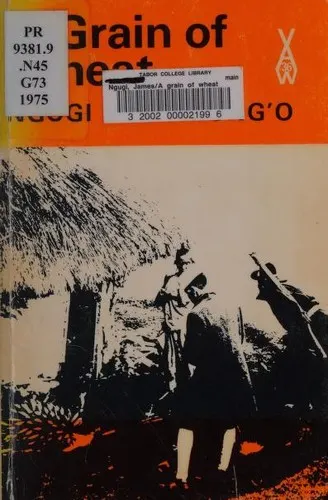
On the eve of Kenyan independence, villagers ask the withdrawn Mugo to take a place of honor in their celebration. From that modest summons, Ngũgĩ builds a many-voiced account of resistance in which public heroism and private memory rarely agree.
Like Arrow of God, this landmark of African literature distrusts simple contests between noble tradition and wicked colonial power. Its community is not scenery but a moral intelligence: stories pass from person to person, changing meaning as they go, while guilt, loyalty, and ambition complicate every political claim. Ngũgĩ’s shifting perspectives create the same painful dramatic irony Achebe commands—you see how badly people misunderstand one another, yet also why they must. Few novels make the birth of a nation feel so intimately bound to compromised individual lives.
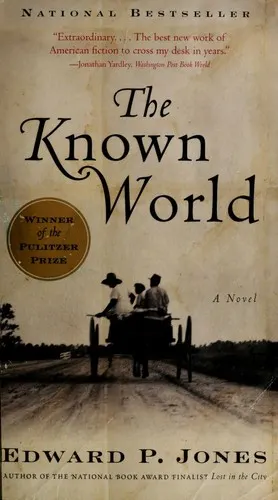
Edward P. Jones begins with the death of Henry Townsend, a Black slaveholder in antebellum Virginia, then lets an entire county unfold around the unsettling fact of his life. The resemblance to Achebe lies not in setting but in method: Jones constructs a complete social order and exposes its contradictions from within, through dozens of lives rather than a single authorized account.
His omniscient narrator moves with astonishing freedom—between households, classes, rumors, laws, and private self-deceptions—while maintaining the calm gravity that makes every irony cut deeper. As in Arrow of God, power depends upon customs that seem permanent until individual choices reveal their fragility. The Pulitzer Prize recognized a novel now widely regarded as an American masterpiece; its moral imagination is so spacious that the community remains alive in the mind long after the plot has ended.
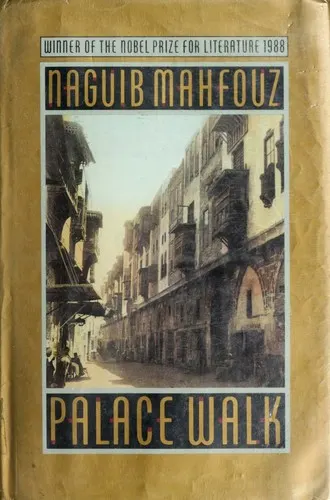
Every night the family of al-Sayyid Ahmad waits for its patriarch to return to their Cairo home. Inside, he demands obedience with near-sacred confidence; outside, he is expansive, charming, and indulgent. Mahfouz makes the distance between those selves both darkly comic and increasingly consequential.
A reader fascinated by Ezeulu’s grandeur and blindness will recognize Mahfouz’s equally unsparing treatment of patriarchal authority. Yet Palace Walk never reduces its household to the father’s domain: wife, daughters, and sons acquire distinct desires and ways of reading the world, while political upheaval enters through conversations, errands, romances, and altered routines. The first volume of Mahfouz’s celebrated Cairo Trilogy has the abundance of a family chronicle and the tightening force of tragedy. It shows why the Nobel laureate became indispensable: few novelists have made the slow erosion of unquestioned power feel so vivid, intimate, and inevitable.